
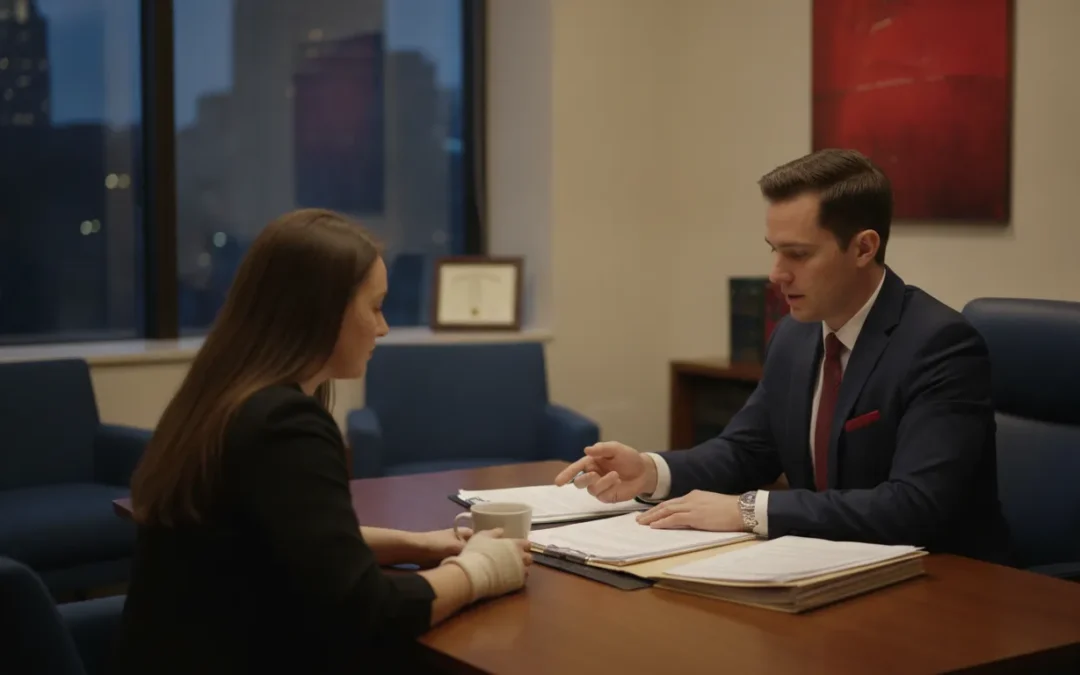
After a crash with an uninsured driver, you may still be dealing with medical appointments, vehicle damage, lost income, and calls from an insurance adjuster. The claim may involve your own uninsured-motorist coverage, but the outcome can depend on policy language, coverage limits, exclusions, fault, and the evidence supporting your injuries.
Request a free, no-obligation case evaluation with Rick Hessig Law.
The best uninsured motorist lawyer kentucky drivers choose is someone who will explain the policy and investigate what happened. The lawyer should examine available insurance coverage and communicate clearly about what the evidence can and cannot establish. Ask about personal attorney involvement, experience with uninsured-motorist claims, and how the firm will develop the facts before you decide.
Choosing legal help is not simply about finding someone to make a demand. It is about finding counsel who understands how an uninsured-driver crash affects your claim and your life, then starts with the details that can protect your position.
How to Choose the Best Uninsured Motorist Lawyer Kentucky Drivers Need
A crash with an uninsured driver can leave you dealing with two problems at once. The other driver may have no liability policy to respond to the claim. Your own insurance policy may become part of the process.
That does not automatically mean your claim will be covered or that compensation is available. The result depends on the policy language, the collision facts, available coverage, fault, and proof of your injuries and losses.
That is why legal help should involve more than sending a demand letter or repeating what an adjuster says. An attorney evaluating an uninsured-motorist matter should be willing to examine your policy, ask how the crash happened, identify what evidence exists, and explain what remains uncertain. You should also understand who will communicate with the insurer and how questions about medical treatment, vehicle damage, lost income, and your daily limitations will be handled.
Your own policy may need careful review
In Kentucky, an uninsured-motorist claim may involve the injured person’s own auto policy. Kentucky law generally requires insurers to offer this coverage unless it is rejected in writing, as provided in KRS 304.20-020, but the policy and the circumstances still control important details. Coverage limits, exclusions, household or vehicle relationships, and other potentially applicable policies can affect the analysis. A careful review is different from assuming that your policy will pay.
For background on the process, see how to file a claim against an uninsured driver in Kentucky. This guide is focused on a different question: whether the legal help you are considering is prepared to assess your particular policy and facts rather than offer a quick conclusion.
Evidence and insurer communications can shape the claim
Useful evidence may include the police report, photographs, vehicle damage, medical records, witness information, video, roadway conditions, and insurance details. Some evidence becomes harder to locate as time passes. An attorney should explain what needs to be preserved and help you communicate accurately with the insurer without making promises about the eventual result.
Before hiring anyone, consider reviewing these questions to ask before hiring a Kentucky car accident attorney. Look for clear answers about personal involvement, investigation, communication, fees, and the next practical step. Rick Hessig Law serves Louisville, Kentucky, and Southern Indiana, with attorney involvement and investigative experience that may be relevant when the evidence needs close attention.
What should a Kentucky uninsured motorist lawyer understand?
A lawyer evaluating an uninsured motorist claim should begin with the insurance policies, not assumptions about what happened. Kentucky UM claims may involve the injured person’s own auto policy, and the available coverage depends on the policy language and the facts of the crash. Kentucky law generally requires auto insurers to offer uninsured motorist coverage unless it was rejected in writing, subject to the applicable statute and policy terms. That does not mean every claim is covered or that a particular policy will pay a particular amount.
The lawyer should carefully review the declarations page, endorsements, definitions, exclusions, and coverage limits. The analysis may also involve who was driving, which vehicle was occupied, and whether the injured person lives with or is related to someone whose policy could matter. Other policies, including coverage connected to another household vehicle, may need to be identified. Household and vehicle relationships can affect the coverage analysis, so a complete intake should ask about every vehicle and auto policy in the household.
Fault remains important even when the other driver has no insurance. The evidence must show how the collision happened and support the injury claim. A lawyer should assess the police report, photographs, vehicle damage, witness accounts, available video, roadway conditions, medical records, and insurance information. Those materials can help connect the crash to the injuries and provide a clearer basis for communications with the insurer.
- Policy language: limits, exclusions, definitions, endorsements, and any written rejection of UM coverage.
- People and vehicles: the drivers, passengers, household members, and vehicles connected to the policies.
- Other coverage: potentially relevant auto policies that should be located and reviewed.
- Crash facts: fault evidence, property damage, witnesses, photographs, video, and roadway conditions.
- Injury proof: medical records and other documentation showing the nature and effects of the injuries.
Readers can review how to file a claim against an uninsured driver in Kentucky for related background, but claim-specific advice requires a review of the actual documents and evidence. No lawyer can promise eligibility, a settlement, a verdict, or a recovery amount before that review. A careful consultation should identify what is known, what remains unclear, and which records are needed next.
How can a lawyer investigate an uninsured motorist claim?
A careful investigation starts before anyone tries to assess what an uninsured motorist claim may be worth. The available evidence can help clarify how the crash happened, which insurance policies may apply, and how the injuries affected your life. It can also preserve details that become harder to locate as time passes.
A lawyer may organize the investigation around several connected questions:
- What does the police report establish? The report may identify the drivers, vehicles, location, reported statements, citations, and initial observations about the crash. It is an important starting point, but it is not always the complete record. An attorney can compare it with other evidence and look for missing or inconsistent details.
- What do photographs and vehicle damage show? Photos of the vehicles, roadway, traffic controls, visible injuries, and surrounding area can help preserve the physical setting. Damage patterns may also provide information about the direction and force of impact. Photographs should be saved in their original form when possible, along with the date and source.
- What do the medical records document? Medical records can connect treatment to the crash and show the diagnoses, symptoms, testing, recommendations, and ongoing care documented by providers. A lawyer can gather records and bills while considering whether the available documentation fairly reflects the injuries being reported.
- Who saw or recorded what happened? Witnesses may have observed the collision, traffic conditions, statements at the scene, or what happened immediately afterward. Investigators may also look for nearby security video, traffic-camera footage, business recordings, or other video sources before they are overwritten or discarded.
- What were the roadway conditions? The investigation may examine lane markings, lighting, construction, weather, signage, pavement, visibility, and other conditions at the crash location. These details can help place the vehicles and events in context rather than relying only on later recollections.
- Which insurance information matters? The other driver may have no liability coverage, but the injured person’s own policy may include uninsured motorist coverage, depending on the policy language and facts. The review may also consider coverage limits, exclusions, household or vehicle relationships, other potentially relevant policies, fault, and proof of injury.
Rick Hessig brings attorney experience together with a background as a licensed professional private investigator. That combination can support a hands-on review of records, physical evidence, witnesses, video, and insurance information. No lawyer can promise a settlement, verdict, recovery amount, or specific result before reviewing the facts and evidence, but a documented investigation gives the claim a clearer foundation.
For more background, review how to file a claim against an uninsured driver in Kentucky.
Questions to ask before hiring legal help
A first conversation should help you understand how the lawyer would evaluate your uninsured-motorist claim. It should not pressure you into making promises before the facts are known. Bring your questions. Pay attention to whether the answers are specific, understandable, and honest about what still needs review.
- Who will personally handle my case? Ask whether the attorney you meet will remain involved, who will communicate with you. And whether your questions go directly to the lawyer or through a larger intake system. Personal involvement can matter when the details of a crash, injury, and insurance policy need careful attention.
- How will you investigate what happened? Ask what evidence the lawyer would want to collect and preserve. That may include the police report, photographs, vehicle damage, medical records, witness information, video, roadway conditions, and insurance details. You can also ask whether the attorney has investigative experience or access to investigation resources when important facts are disputed.
- How will you review my insurance coverage? An uninsured-motorist claim may involve your own auto policy, and the result can depend on policy language and the facts. Ask how the lawyer will examine coverage limits, exclusions, household and vehicle relationships, other potentially applicable policies, and the insurance company’s position. A lawyer should not give a definite coverage answer without reviewing the policy and relevant facts.
- Is my situation a case you handle? Explain what happened, when you sought medical care, what injuries you are dealing with, and what you know about the other driver’s insurance. Ask what additional information is needed to assess whether the firm is a fit. A careful attorney should distinguish between an initial impression and a conclusion after reviewing the evidence.
- How will we communicate? Ask how often you can expect updates, who your day-to-day contact will be, and how quickly urgent questions are normally addressed. Clear communication matters when you are managing treatment, vehicle damage, work disruption, and calls from insurers at the same time.
- What can you honestly tell me right now? No lawyer can promise a settlement, verdict, recovery amount, or specific result before reviewing the facts and evidence. Be cautious of certainty that is not supported by a policy review and investigation. For more ideas, review these questions to ask before hiring a Kentucky car accident attorney.
Finally, ask for the fee agreement in writing and make sure you understand how fees and case expenses are addressed. Rick Hessig Law explains its approved arrangement as “No Fee Unless You Win,” but in accordance with KBA regulations. Case and court costs may be the responsibility of the client. Request an explanation of those terms before deciding whether to move forward.
How do uninsured motorist lawyer fees work in Kentucky?
Cost is a reasonable concern after a crash, especially when you are already dealing with medical bills, vehicle damage, missed work, and insurance calls. Before hiring a lawyer, ask for a clear explanation of how attorney fees are calculated, when they become due, and which case expenses are handled separately.
Rick Hessig Law describes its arrangement as No Fee Unless You Win, with no upfront attorney fee. That means the firm does not ask you to pay an attorney fee at the beginning of the case. The written fee agreement should control the specific terms of any representation, so read it carefully and ask questions about anything you do not understand.
| Question | What to clarify |
|---|---|
| Attorney fee | Whether there is an upfront attorney fee and when the fee is addressed. |
| Case costs | Which case and court costs may remain the client’s responsibility. |
| Written agreement | Where the arrangement and cost terms are explained in writing. |
What does “No Fee Unless You Win” include?
A no-fee-unless-you-win arrangement concerns the attorney fee. It does not mean every possible expense connected with an uninsured or underinsured motorist claim is automatically free. Case expenses can vary based on the work required, the evidence involved, and whether litigation becomes necessary. Do not rely on a general advertisement alone. Ask the lawyer to explain how costs are treated in your situation and request the agreement in writing.
In accordance with KBA regulations, we must inform you that case and court costs may be the responsibility of the client. This disclosure is important because attorney fees and case or court costs are not necessarily the same thing. A careful conversation about both can help you make an informed decision without guessing about your financial responsibility.
What should you ask before signing?
- Is there any upfront attorney fee?
- How are case and court costs handled?
- Which costs could remain my responsibility?
- Will the fee arrangement be provided in a written agreement?
- Who will explain changes if the claim moves toward litigation?
A free, no-obligation evaluation can be a useful way to discuss the crash, your insurance documents, and fee questions before deciding what to do. You can request a free case evaluation from Rick Hessig Law and ask directly about the proposed arrangement. No lawyer can promise a settlement, verdict, recovery amount, or other result before reviewing the facts and available evidence.
When should you request a case evaluation?
You do not need every answer before asking for legal guidance. A case evaluation can help if the other driver had no insurance or left the scene. It can also help if you are unsure whether your policy may provide uninsured or underinsured motorist coverage.
It may be useful when an insurer asks for a statement, medical records, or a release before you understand what you are signing.
Bring whatever information you have, even if it is incomplete. Helpful materials may include:
- The collision report and any exchange of insurance information.
- Photos or video of the vehicles, roadway, traffic conditions, and visible injuries.
- Medical records, bills, prescriptions, and notes about missed work or daily limitations.
- Insurance policies, claim numbers, adjuster letters, emails, and notes from phone calls.
- Names and contact information for witnesses, passengers, or people who saw the crash afterward.
Do not wait to request an evaluation simply because you do not yet have a complete file. An attorney can explain what information matters and what questions to ask your insurer.
You can also review how to file a claim against an uninsured driver in Kentucky. Your policy language and crash circumstances still need individual review.
Ask which state’s facts apply
Crashes in Kentuckiana can involve Kentucky and Southern Indiana roads, drivers, policies, and medical providers. Tell the lawyer where the collision happened, where each driver lives, which state issued the policy, and where the treatment occurred. Ask directly whether Kentucky law, Indiana law, or facts from both states may affect the analysis. A local attorney should explain the issue rather than assume that every cross-river case follows the same process.
Be cautious of anyone who promises a settlement, verdict, recovery amount, or guaranteed result before reviewing the evidence. A responsible evaluation identifies questions, possible coverage issues, and practical next steps without pretending to know the outcome in advance. Rick Hessig Law offers a free, no-obligation case evaluation. You can request a free case evaluation or call the KY Injury Hotline at 502-777-1111.
Talk with Rick Hessig Law about your uninsured motorist claim.
Frequently asked questions
Is uninsured motorist coverage required in Kentucky?
Kentucky generally requires auto insurers to offer uninsured motorist protection unless the named insured rejects it in writing, subject to the policy and applicable law. That does not mean every claim is automatically covered. Limits, exclusions, the people and vehicles involved, and the evidence can affect the analysis. Review your policy and ask a lawyer to explain how the language may apply to your facts.
What should I bring to a consultation about an uninsured-driver crash?
Bring the insurance policy or declarations page if you have it, along with the crash report and photographs. Medical records, bills, wage information, repair estimates, insurance letters, and witness contacts can also help.
Do not delay seeking help because a document is missing. A lawyer can explain which records may still be requested and what questions need answers.
What questions should I ask before hiring an uninsured motorist lawyer?
Ask who will personally handle the matter. Ask how the firm will review the policy and investigate the crash. Ask how often you can expect updates, what the fee agreement says, and which case or court costs may remain your responsibility.
You can also ask what the lawyer cannot determine until the facts and evidence have been reviewed. Clear answers are more useful than a promise about the result.
Can a lawyer guarantee that my uninsured motorist claim will succeed?
No. A responsible lawyer should not promise coverage, representation, a settlement, a verdict, a recovery amount, or a specific result before reviewing the policy, facts, and evidence. A consultation is an opportunity to understand the issues and possible next steps, not a guarantee of an outcome.
This information is for general informational purposes only and is not legal advice. To see if Rick Hessig Law may be able to help, please request a free case evaluation.
Talk with Rick Hessig Law about your claim
If you were hurt by a driver with no applicable insurance, you do not have to sort through policy language and evidence alone. Rick Hessig Law serves injured people in Kentucky and Southern Indiana.
The firm can review the information you provide and explain possible next steps without promising a particular result.
Request a free, no-obligation case evaluation, or call the KY Injury Hotline at 502-777-1111.
Car Wreck? Call Rick! No Fee Unless You Win. In accordance with KBA regulations, we must inform you that case and court costs may be the responsibility of the client.