
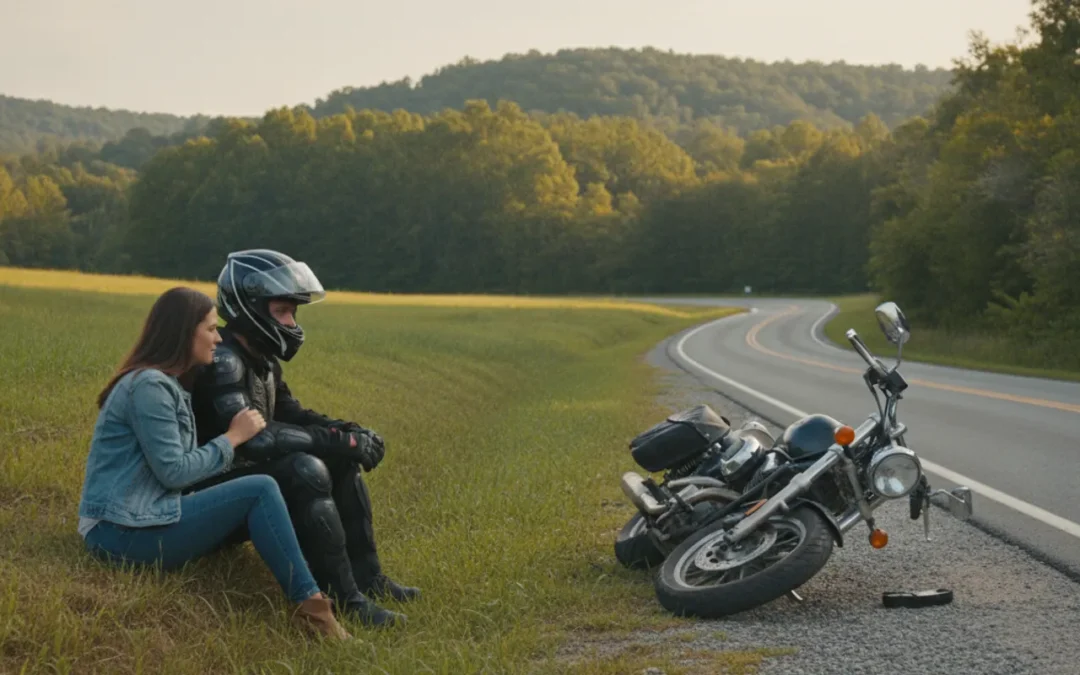
A motorcycle crash can leave you dealing with pain, disrupted plans, and questions from insurance companies all at once. A Kentucky motorcycle accident lawyer can help you understand the claim process, but there are also practical steps you and your family can take right away. Start with your health, then preserve the information that may help explain what happened and how the crash affected you.
Contact Rick Hessig Law to discuss your next step
What should you do first after a motorcycle crash?
Get to a safe place if you can do so without worsening an injury. Call emergency services when anyone may be hurt, traffic is blocked, or the scene is unsafe. Do not assume that you are uninjured because you can stand or speak. Some symptoms can appear or change after the immediate shock passes.
Seek medical attention immediately for your injuries. Tell the provider how the collision happened and describe every symptom, even if it seems minor. Follow the care instructions you receive, and keep copies of visit summaries, prescriptions, referrals, and bills. If a symptom changes or a new one appears, report that to a medical professional rather than trying to diagnose it yourself.
If you are a family member helping the rider, focus on immediate safety and care. When appropriate, write down the names of responding agencies, the incident or report number, and the location where the motorcycle and other vehicles were moved. Avoid moving damaged property or discarding gear until you have recorded its condition and received guidance.
For broader post-crash steps, see this guide to what to do after a car wreck. Some details are different for a motorcycle, but the basics of safety, medical care, and keeping clear records still matter.
What information should you collect at the scene?
If your condition and the scene allow, collect facts without putting yourself in danger. Ask for the other driver’s name, contact information, license plate, and insurance details. Note the make and model of each vehicle and the names and contact information of witnesses. Record the responding agency and report number if one is available.
Photographs and short notes can help preserve details that may be difficult to remember later. Capture the overall scene, vehicle positions, road layout, traffic controls, visible damage, debris, skid or tire marks, and weather or lighting conditions. Photograph your motorcycle from several angles. Include close views of damaged parts as well as wider images showing where the damage is located.
- Take scene photos from a safe place, including approaches and nearby intersections.
- Save names and contact details for people who saw the crash or stopped to help.
- Write down what you remember as soon as practical, including the sequence of events and anything said at the scene.
- Keep the original photos and files. Avoid editing or adding captions to the only copy.
- Ask how to obtain the crash report and keep its identifying information.
Memory can be affected by pain, medication, and stress. A dated note made soon after the crash can help you distinguish what you personally observed from what you learned later. Do not guess at speed, distance, or timing if you do not know. It is fine to record uncertainty.
Kentucky State Police’s 2024 crash-facts report describes fatal traffic collisions across Kentucky. It provides statewide crash context, not a motorcycle-specific finding or an explanation of any individual collision.
Why should you keep your helmet and other riding gear?
Do not throw away a helmet, jacket, gloves, boots, or other gear that was involved in the crash. Do not clean, repair, or alter it before photographing its condition. Store each item somewhere dry and secure, and make a note of when and where it was stored. If the gear was borrowed or recently purchased, preserve any available purchase, maintenance, or ownership records.
Photograph the items from different angles. Include close views of scuffs, cracks, tears, missing fasteners, or other changes, along with a wider photo that identifies the item. If possible, record the brand, model, size, and any label information without removing tags. Do not assume that visible damage alone explains how an injury occurred; the item is one part of the record and may need context.
Keep a simple inventory of what was worn and what was damaged. Note any gear that was replaced after the crash and save receipts. If you need to replace protective equipment for safety, prioritize your well-being and preserve the damaged item and records if possible. A lawyer can discuss how to handle evidence that may be relevant to a claim.
What records can help explain the impact of the crash?
Keep the paperwork connected to both the collision and its effects. This may include medical records and bills, pharmacy receipts, repair or towing documents, insurance letters, photographs, and notes about missed work or changes to ordinary activities. You do not need a perfect filing system. A folder, envelope, or digital record organized by date is a useful start.
For medical visits, save the appointment date, provider name, instructions, and any follow-up plan. Keep a short symptom diary if it helps you describe changes over time. Make entries factual and specific: what you felt, when it happened, and what activity was affected. This record does not replace medical care or a provider’s notes, but it can help you explain your experience.
For damaged property, take pictures before repairs begin and save estimates, invoices, and towing or storage records. Keep the motorcycle available for inspection when reasonably possible. Before authorizing repairs, ask the insurer or a lawyer whether there are steps you should take to document the damage. Do not delay necessary safety-related decisions just to preserve a claim; get advice about documenting them.
A car accident checklist can help you think through documents to keep. You can also review how to report an accident for general recordkeeping and reporting considerations.
How can you organize the first week after a crash?
A simple routine can make the paperwork easier to manage while you focus on recovery. Set aside one folder, either paper or digital, and label it with the crash date. Create separate sections for medical care, property, insurance, and scene information. Put new records in the appropriate place as they arrive instead of relying on memory to find them later.
Use a short dated log to track calls, appointments, and pending tasks. For example, note that you spoke with an adjuster on Tuesday, were asked for photographs, and plan to ask what specific images are needed before sending them. Add the name and contact details of the person you spoke with and record whether a follow-up was promised. If a request arrives in writing, save the original message and a copy of your response.
When you receive a bill or letter, write down the date received and any date by which a response is requested. Do not treat a date on a letter as a legal deadline without checking what it means. If it is unclear, ask the sender to explain the request and consider seeking legal guidance. Avoid discarding envelopes or attachments that help show when and how a document arrived.
Ask a trusted family member to help with filing or calls if pain, medication, or transportation makes those tasks difficult. Agree on one place to store originals and keep copies available for reference. Share only what is necessary, and avoid sending the only copy of a photograph, report, or medical record.
What should you ask before speaking with an insurer?
After a crash, you may hear from one or more insurance companies. You can ask who is calling, which policy or claim the call concerns, and what information the adjuster is requesting. Keep a note of the date, caller, claim number, and any requested documents. If you do not understand a question or need time to review a document, ask for clarification rather than feeling pressured to respond immediately.
Be accurate and avoid guessing. A brief factual account is safer than speculation about speed, visibility, or who caused the collision. Do not agree that you were at fault simply to be polite. Do not sign a release or accept a proposed resolution without understanding what it covers and whether it would close any part of a claim. Ask for important requests and offers in writing.
Coverage depends on the applicable policies and circumstances. Ask what policy is being discussed, what documents are needed, and whether the insurer is asking for a recorded statement or medical authorization. You can request time to understand the request and consider getting legal guidance before deciding how to respond. Keep copies of what you send and note when it was sent.
| Situation | Useful next step | Record to keep |
|---|---|---|
| You are contacted by an insurer | Confirm the caller, company, claim number, and request | Date, caller details, and written request |
| You are asked for a statement | Ask what topics it will cover and whether you may respond later | Your notes and any correspondence |
| You receive a release or proposed payment | Read what claims or costs the document addresses before signing | Full copy of the document and offer |
| Your motorcycle is damaged | Photograph it and ask about inspection before repairs | Photos, estimates, invoices, and storage records |
| You need care or follow-up | Follow medical instructions and ask your provider about concerns | Visit summaries, bills, and appointment notes |
For more on the claim process, read how to handle an auto insurance claim after a Kentucky crash. If an uninsured driver may be involved, this Kentucky uninsured-driver claim guide explains issues to ask about. Policy terms vary, so an article cannot determine what coverage applies to your situation.
How can you think about fault without making assumptions?
Do not assume that a crash has a simple answer based on the type of vehicle involved. The relevant facts may include what each person did, the road layout, traffic controls, visibility, vehicle damage, witness accounts, and available records. A motorcycle rider’s presence on the road does not by itself establish fault, and another driver’s account is not the same as a complete investigation.
Keep your account focused on what you know. Describe where you were traveling, what you saw, and what happened next. Separate direct observations from conclusions. If you are unsure about a detail, say so. Avoid posting theories about fault or detailed crash accounts on social media while facts are still being gathered.
Responsibility may be disputed, and more than one person may be alleged to have contributed. The effect of any fault finding depends on the facts and applicable law. Do not treat an early insurance position, a traffic citation, or a quick conversation as a complete legal analysis. A lawyer can review available evidence and explain questions that may matter to your situation.
Rick Hessig Law represents injured people in Kentucky and Southern Indiana. Rick Hessig is an attorney and Licensed Professional Private Investigator, and the firm describes its approach as personal attorney involvement with investigative case development. If you want to understand the process, you can read about questions to ask a motorcycle accident lawyer and what to expect from a free consultation.
When may it help to speak with a Kentucky motorcycle accident lawyer?
You may want to ask a lawyer about your options if you suffered an injury, fault is disputed, the insurer requests a statement or broad records, a settlement document is presented, or the claim involves multiple people or policies. You can also ask for help understanding what evidence to preserve and what steps may matter next. These are reasons to get information, not a promise that a particular claim will be accepted or succeed.
Bring the information you have, not a polished case file. Useful items may include the crash report number, photographs, insurance correspondence, medical documents, a list of providers, and notes about time missed from work or daily activities. If you do not have something, say so. A case evaluation can identify what is known and what questions remain.
Rick Hessig Law offers a free, no-obligation case evaluation. The firm handles injury matters on a “No Fee Unless You Win” basis, with no upfront attorney fee. Case and court costs may be the client’s responsibility. Ask for a clear explanation of the fee agreement and any possible costs before deciding whether to proceed.
For a review of how a claim may be evaluated, see factors that may affect injury settlement discussions. Examples and general information cannot predict the value or result of an individual case.
Frequently asked questions
Should I keep my helmet after a crash?
Yes, if it is safe and practical to do so. Photograph it before cleaning or altering it, record identifying details, and store it securely. If it must be replaced for safety, keep the original if possible and save records of the replacement.
What if I did not feel injured at the scene?
Pay attention to changes in how you feel and seek medical care if you have concerns. Do not rely on the absence of immediate symptoms to decide that no care is needed. Follow a medical professional’s guidance.
Should I give an insurer a recorded statement?
Ask who is requesting it, why it is needed, and what topics it will cover. You can ask for time to understand the request and consider legal guidance before agreeing. Keep your answers factual and do not guess.
Can I ask for a case evaluation before I have every document?
Yes. You can explain what happened and identify what you have so far. A free case evaluation can help you understand what additional information may be useful, without guaranteeing representation or an outcome.
Talk through your next step
If you or a family member was hurt in a motorcycle crash in Kentucky, organize what you know, follow medical guidance, and ask questions before signing claim documents. “Car Wreck? Call Rick!” The KY Injury Hotline is 502-777-1111.
Request a free, no-obligation case evaluation
In accordance with KBA regulations, we must inform you that case and court costs may be the responsibility of the client.