
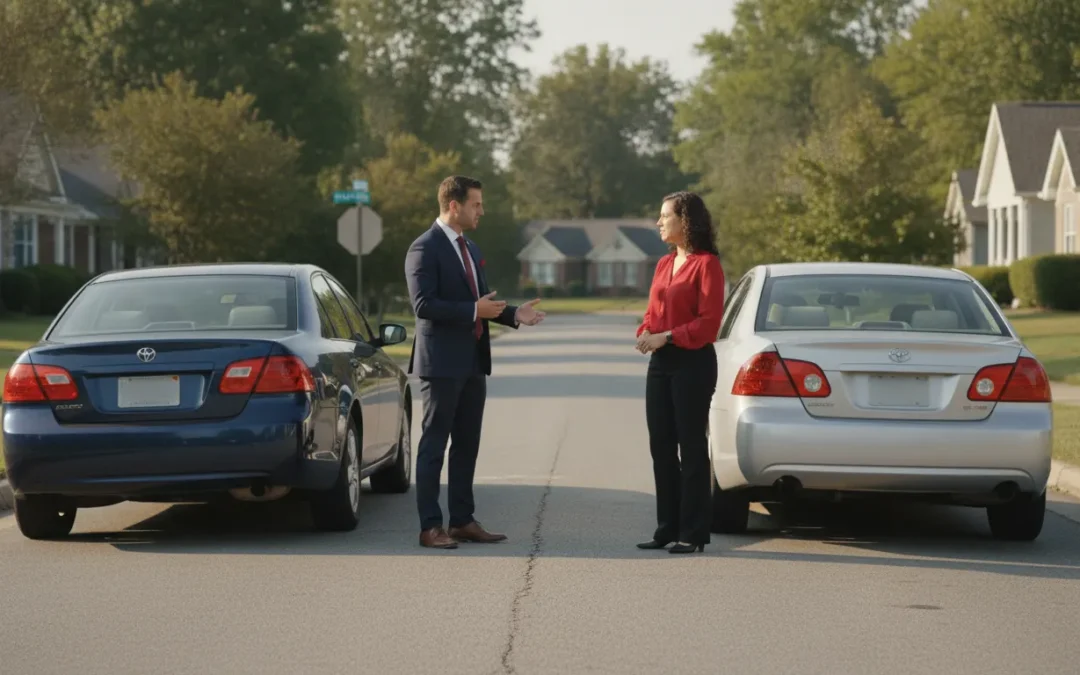
People searching for the average settlement for rear-end collision cases often want a clear number. The honest answer is that there is no single average that can predict what an individual Kentucky claim is worth. The result depends on the injuries, medical evidence, lost income, fault, available insurance, and the costs involved in developing the claim.
Request a free, no-obligation case evaluation with Rick Hessig Law.
Rear-end crashes can look straightforward at the scene, but the legal and financial questions may become more complicated after the first medical visit. A person may feel fine at first and develop symptoms later. The other driver may dispute how the crash happened. An insurer may ask for a quick statement before the full medical picture is known. This guide explains the factors that deserve careful attention in Kentucky and Southern Indiana.
Is there an average settlement for a rear-end collision?
There is no reliable single average settlement for a rear-end collision. A claim is evaluated using case-specific evidence, including the nature and duration of the injuries, treatment records, lost income, property damage, fault evidence, insurance coverage, and how the claim is developed. A published number or calculator cannot account for those facts in your case.
Two crashes can look similar in photographs and still produce very different claims. One person may have short-term soreness and no missed work. Another may need continuing care, lose income, or face a disputed injury history. The vehicles, roads, drivers, witnesses, and policies may also be different.
For that reason, be cautious with websites that promise a formula or present settlement ranges as if they apply to every rear-end collision. Those figures are not a substitute for reviewing your medical records, employment impact, crash evidence, and insurance policies.
What factors affect a Kentucky rear-end collision claim?
A Kentucky rear-end collision claim is shaped by several connected factors rather than one average. The most important questions usually involve the injury evidence, the effect on daily life and work, who is responsible, what insurance is available, and whether the claim can be supported with records and testimony.
| Factor | What it can show |
|---|---|
| Medical documentation | What injuries were diagnosed, what care was recommended, and how recovery is progressing. |
| Lost income | Whether the crash affected work, missed time, reduced duties, or future earning ability. |
| Fault evidence | What the drivers, witnesses, photographs, video, and crash records show about responsibility. |
| Insurance coverage | Which policies and limits may be available to address an injury claim. |
| Case costs and development | What records, experts, investigation, and litigation steps may be needed to prove the claim. |
How does medical documentation affect the claim?
Medical documentation connects the collision to the injury and shows how the injury affected the person over time. Records may include the first evaluation, diagnoses, treatment plans, follow-up visits, imaging, medication, therapy, referrals, and statements about work or daily activities. Consistent records give a clearer picture than a single bill or a description made long after the crash.
Prompt medical attention can also help identify injuries that are not obvious at the scene. It is important to follow medical instructions and tell providers about symptoms accurately. Do not exaggerate, but do not minimize pain or limitations because the crash initially seemed minor.
Medical bills alone do not tell the entire story. The type of injury, the expected recovery, whether symptoms continue, and whether additional care is recommended may matter. A review should also consider whether a preexisting condition was aggravated by the collision, rather than assuming that a prior medical history automatically defeats a claim.
Learn more about medical proof in car accident back and neck injury claims.
How do lost income and daily limitations affect value?
Lost income can be part of the case when a crash causes missed work, reduced hours, a temporary change in duties, or another documented effect on earnings. Useful evidence may include pay records, employer statements, schedules, tax records, disability notes, and a clear explanation of why the limitations were caused by the collision.
The impact is not limited to a paycheck. A person may have difficulty lifting, driving, sleeping, caring for children, completing household tasks, or participating in normal activities. These details should be documented honestly and consistently. A simple daily log can help preserve information that may otherwise be forgotten during recovery.
Lost income and daily limitations should be connected to the medical evidence. The question is not only whether a person missed work, but why, for how long, and what the medical records support. If the crash affects future work ability, that issue may require additional evidence and should not be reduced to a guess.
Mid-article help: If an insurer is asking you to explain your injuries or lost work before you know the full impact, request a free case evaluation to discuss your situation with Rick Hessig Law. You can also call the KY Injury Hotline at 502-777-1111.
Can fault be disputed after a rear-end crash in Kentucky?
A rear-end collision may suggest that the following driver was responsible, but the facts still need to be examined. Drivers may disagree about traffic conditions, a sudden stop, lane changes, visibility, vehicle movement, or whether another event contributed to the impact. Photographs, vehicle damage, witnesses, traffic-camera footage, police records, and other evidence can help establish what happened.
Kentucky uses an allocation-of-fault rule for tort actions. Under Kentucky Revised Statutes Section 411.182, fault may be allocated among parties and damages may be adjusted according to the assigned percentage. That means a fault dispute can affect the claim even when another driver caused most of the collision.
This is one reason not to assume that a rear-end claim is automatically resolved by the damage pattern. It is also one reason to preserve evidence before vehicles are repaired, video is overwritten, or witness memories fade. A careful review should separate what is known from what still needs to be established.
What insurance coverage may be available?
Insurance coverage can affect whether a claim has a practical path to recovery. The other driver’s liability policy may be relevant, but the available policies depend on the drivers, vehicle ownership, policy language, coverage limits, and facts of the crash. Your own policy may also contain coverage that matters in some situations, including uninsured or underinsured motorist coverage.
Do not assume that the first insurance representative who calls has identified every possible source of coverage. Confirming coverage can require reviewing declarations pages, policy terms, household relationships, vehicle ownership, and whether another driver or vehicle was involved. A claim also may involve more than one insurer, and the duties of those insurers are not identical.
An insurer’s first offer is not automatically the value of a claim. Before accepting or signing anything, understand what the document says about releasing claims and whether the medical picture, lost income, and future needs are fully known. If you already received a proposed release, bring it to a legal consultation before making a decision.
For more context, read what car accident insurance lawyers actually do and what to do if an uninsured driver caused the crash.
Why do case costs and claim development matter?
A claim is not only a calculation of medical bills. It may require collecting records, reviewing employment proof, investigating the crash, obtaining photographs or video, speaking with witnesses, evaluating insurance coverage, and responding to an insurer’s position. More complex issues may require additional professional evidence. The work needed depends on the facts, not on a generic online average.
Rick Hessig Law describes its attorney-fee model as No Fee Unless You Win, with no upfront attorney fee. In accordance with KBA regulations, we must inform you that case and court costs may be the responsibility of the client. Ask how potential costs are handled in your specific matter before moving forward.
The purpose of discussing costs is clarity, not pressure. You should understand what work may be needed, what information the firm needs from you, and which expenses may be your responsibility. A free case evaluation can help identify those questions before you make a decision.

What evidence should you gather after a rear-end collision?
Start with the records that show what happened, what treatment was needed, and how the injury affected your life. You do not need to build a perfect legal file before asking for help, but preserving the available information can make the initial review more useful.
- Photos or video of the vehicles, road, traffic conditions, and visible injuries.
- The names and contact information of witnesses and the other driver.
- The crash report and insurance information exchanged at the scene.
- Medical records, bills, prescriptions, therapy notes, and appointment instructions.
- Pay records, employer communications, schedules, and notes about missed work.
- Messages or letters from insurers, including requests for statements or releases.
- A dated record of symptoms, limitations, treatment, and changes in daily activities.
Keep copies in one place and avoid deleting texts, photos, or emails related to the collision. If the vehicle has not been repaired, ask how to preserve photographs and inspection information. A prior guide explains what to do after a rear-end collision; this article focuses on the separate question of settlement factors.
When should you speak with a Kentucky injury lawyer?
Consider a consultation when injuries continue, treatment is ongoing, work has been affected, fault is disputed, an insurer requests a recorded statement, coverage is unclear, or you are asked to sign a release. You do not need to know the claim’s value before contacting a lawyer. The purpose of an evaluation is to understand the evidence, possible issues, and next steps.
Rick Hessig Law serves injured people in Louisville, Kentucky, and Southern Indiana. Rick Hessig’s attorney and licensed-investigator background supports a direct review of the facts and evidence, rather than relying on an online calculator. You can also review clear signs it may be time to hire a car accident lawyer.
Get your free case evaluation here. You can also call Rick at 502-777-1111. A consultation does not promise that the firm will accept a case or guarantee a result.
Frequently asked questions about rear-end collision settlements
How much is a rear-end collision settlement worth in Kentucky?
There is no dependable number that applies to every Kentucky rear-end collision. The claim may be affected by injury evidence, medical treatment, lost income, fault, insurance coverage, and case costs. A lawyer must review the facts and records before discussing what issues may affect an individual claim.
Does the person who rear-ended me automatically pay my settlement?
Not automatically. The facts may support a claim against the other driver, but responsibility and available insurance still need to be evaluated. Drivers may dispute how the crash happened, and Kentucky’s allocation-of-fault rule can affect damages when more than one party is assigned fault.
Should I accept the insurance company’s first offer?
Do not accept or sign a release until you understand what it covers and whether your medical treatment, lost income, and future needs are known. An insurer’s offer may not account for every issue. Consider getting legal advice before making a decision about a release.
What if my injuries were not obvious right after the crash?
Some symptoms may become clearer after the initial shock of a collision. Seek medical attention immediately for your injuries. Follow the provider’s instructions, describe symptoms accurately, and keep records of treatment and limitations. A medical review can help connect the condition to the collision.
Can I still have a claim if I had a prior injury?
A prior condition does not answer the question by itself. The relevant issue may include whether the collision caused a new injury or worsened an existing condition. Medical records and provider opinions can help explain the difference. Be candid about prior treatment and symptoms during a consultation.
How do I find out what my rear-end collision claim may involve?
Gather the information you have and request a case evaluation. Rick Hessig Law offers a free, no-obligation evaluation for people in the Kentuckiana area. The firm can review the crash, injuries, evidence, insurance communications, and questions about the next step. No result is guaranteed.
Talk with Rick Hessig Law about your collision
An online average cannot tell you how a particular rear-end collision claim should be evaluated. Medical documentation, lost income, disputed fault, insurance coverage, and case costs all deserve a fact-specific review. If you were injured in Louisville, Kentucky, or Southern Indiana, contact Rick Hessig Law before making a decision about an insurance offer or release.
GET YOUR FREE CASE EVALUATION HERE.
Car Wreck? Call Rick! 502-777-1111
This information is for general informational purposes only and is not legal advice. It does not create an attorney-client relationship. The facts of each case are different, and no result is guaranteed.