
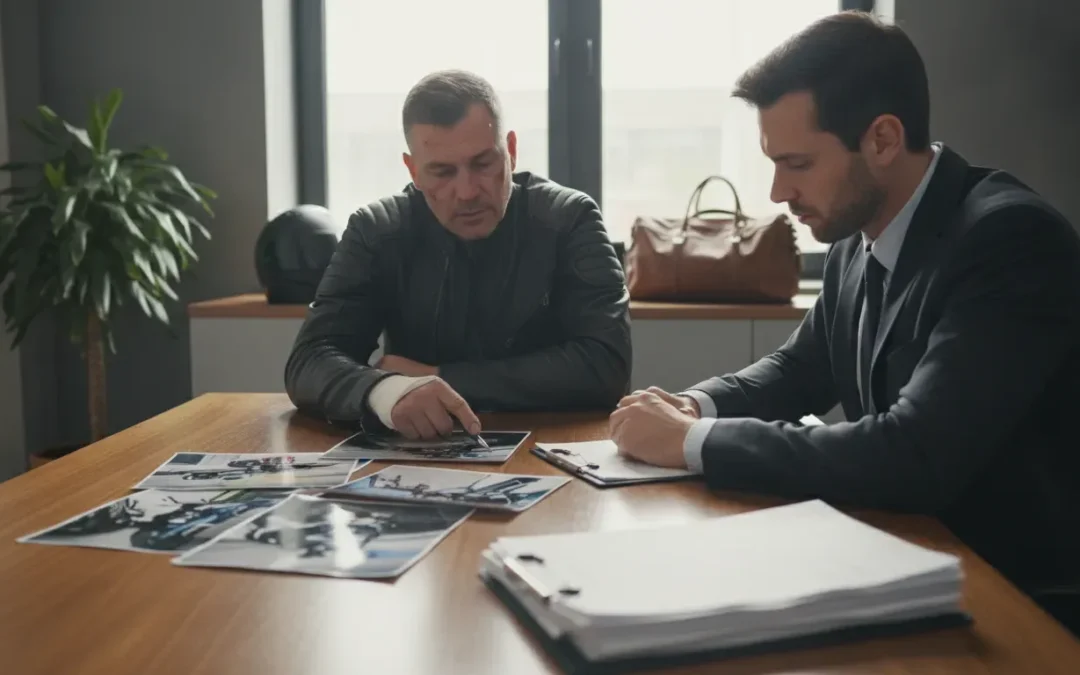
Finding a Louisville motorcycle accident lawyer is not only about calling the first name you see after a crash. You may be dealing with injuries, motorcycle damage, medical appointments, insurance questions, and uncertainty about what evidence matters. Asking focused questions before hiring can help you understand how a lawyer would approach your situation and whether the working relationship feels right.
Request a free, no-obligation case evaluation with Rick Hessig Law.
This guide is for general information. It does not assume who caused a collision or predict whether a claim will succeed. The facts, available evidence, insurance coverage, and applicable law all matter.
What should I ask a Louisville motorcycle accident lawyer?
Ask how the lawyer will investigate the crash, document your injuries and losses, handle insurance communication, explain fees and case costs, communicate with you, and evaluate the fit between the firm and your situation. You should receive clear answers without a promise of a settlement, verdict, recovery amount, or specific result.
- How will you investigate the motorcycle crash?
- What evidence should I preserve?
- How will you document my injuries and losses?
- How will you handle insurance companies?
- Who will handle my case and how will we communicate?
- How do your fees and case costs work?
- What do you need from me before deciding whether to work together?
1. How will you investigate my motorcycle crash?
Ask the lawyer to explain the first steps for reviewing your specific collision. A useful answer should identify likely evidence sources and explain how the firm will separate known facts from questions that still need investigation. It should not assume that a motorcycle rider, passenger, or other driver was automatically at fault.
Depending on the facts, the investigation may include the crash report, scene photographs, motorcycle damage, vehicle damage, witness accounts, nearby video, roadway conditions, visibility, traffic controls, helmet and protective equipment, medical records, and insurance information. Evidence can vary from one crash to another. The important question is whether the lawyer has a thoughtful process for identifying, preserving, and evaluating what is actually available.
Rick Hessig brings attorney experience and a licensed professional private investigator background to his practice. If you speak with Rick Hessig Law, ask how that experience would apply to the facts of your crash. A credential should support a concrete investigation plan, not replace one.
2. What motorcycle-crash evidence should I preserve?
Ask what you should keep and how to protect it while your claim is being reviewed. Do not discard, repair, sell, or alter important property before asking how it should be documented. If a damaged motorcycle must be moved or repaired for safety, photograph it first when possible and keep estimates, invoices, parts information, and inspection records.
Potentially useful materials may include:
- Photographs and video from the crash scene, roadway, traffic controls, vehicles, motorcycle, and visible injuries.
- The responding officer’s report information and any exchange-of-information documents.
- Names and contact information for people who witnessed the collision.
- Helmet, jacket, boots, gloves, and other riding gear, if relevant to the facts or injuries.
- Medical records, bills, prescriptions, provider instructions, and a record of symptoms and limitations.
- Employment records or other documentation showing time missed or work-related effects.
- Insurance policies, claim numbers, letters, emails, recorded-statement requests, and proposed releases.
- Messages, photographs, videos, or other files that may show the condition of the roadway or vehicles.
Preserve original files when you can. Do not edit photographs or delete messages. If you are unsure whether something matters, ask the lawyer before throwing it away.
3. How will you document my injuries and losses?
Ask how the lawyer plans to understand both your treatment and the practical effects of the crash. Motorcycle collisions can involve serious physical injuries, but the label of the injury alone does not establish a claim or its value. Medical records, provider opinions, treatment instructions, symptom history, work effects, and other reliable documentation help show what happened after the collision.
Tell medical providers about your symptoms and follow their instructions. Keep appointment information, bills, receipts, medication records, and notes about activities that became difficult. Do not minimize symptoms because they were not obvious at the scene, and do not exaggerate them. Accurate, consistent communication gives your providers and lawyer a better record to review.
Seek medical attention immediately for your injuries. Emergency care is a medical decision, not a legal strategy. If symptoms change or new concerns arise, tell your provider.
4. How will you handle insurance companies?
Ask which insurers may need to be contacted and how the firm handles requests for information, recorded statements, medical authorizations, vehicle inspections, or releases. Depending on the circumstances, more than one policy or insurer may be relevant. The lawyer should explain what is known, what remains uncertain, and what you should do before responding to a request.
Keep every letter, email, text, claim number, and voicemail from an insurer. Be accurate when you communicate, but do not guess about facts you do not know. Avoid signing a broad release or accepting a final injury settlement before you understand what it covers and how it could affect unresolved medical or financial issues. Ask the lawyer to explain the purpose and possible effect of any document before you sign it.
For related guidance about organizing an insurance claim, see how to handle an auto insurance claim after a Kentucky car accident. That article covers claim records and communication generally; a motorcycle crash still requires a fact-specific review.
5. Who will handle my case day to day?
Ask whether the lawyer you meet will personally handle important parts of the case, who else may work on it, and how decisions will be explained. You can also ask how to reach the firm, who responds to routine questions, and how quickly you should expect a response. These are practical questions, but they matter when you are managing treatment, work, transportation, and insurance communications.
Rick Hessig Law emphasizes direct attorney involvement and a local Kentuckiana focus. Ask what that means for your case in practical terms. The answer should tell you who will investigate, review records, communicate about major decisions, and explain the next step.
Good communication also includes honest limits. An attorney should be able to say when more information is needed and should not promise acceptance, representation, or a specific outcome before reviewing the facts and any conflicts or fit issues.
6. How do your fees and case costs work?
Ask for a plain-language explanation of the fee agreement before signing it. Rick Hessig Law uses the approved message No Fee Unless You Win and offers a free, no-obligation case evaluation. Ask what that means under the proposed agreement, when an attorney fee would be owed, how case expenses are handled, and what happens if the matter does not result in a recovery.
Do not rely on a slogan alone. Read the written agreement and ask about anything you do not understand. Do not assume that every possible expense is free or that a particular percentage applies unless it is stated in the agreement and explained to you.
In accordance with Kentucky Bar requirements, case and court costs may be the responsibility of the client. Ask the firm to explain those costs and how they are treated under the agreement before you decide whether to sign.
Have questions about your motorcycle crash? Request a free case evaluation before deciding what to do next. You can also call the KY Injury Hotline at 502-777-1111.
7. What should I bring to the first conversation?
You do not need a perfect file before asking for an evaluation. Bring or gather what you have, including the crash date and location, contact information for the people involved, insurance details, the report number, photographs, medical information, vehicle or motorcycle records, work information, and letters or messages from insurers. If you do not have everything, say so.
Write down your questions before the call. Describe the event in your own words, identify what you know and what you are unsure about, and mention any prior or later treatment that may be relevant. A complete conversation is more useful than trying to give the answer you think the lawyer wants to hear.
8. How will you assess whether my case is a good fit?
Ask what information the lawyer needs before deciding whether the firm may be able to help. A careful evaluation may consider where the crash occurred, the people and vehicles involved, available insurance, the evidence, your injuries and treatment, potential conflicts, and whether the matter fits the firm’s services and jurisdiction.
The lawyer may need time to review documents or investigate before giving a more informed assessment. That is different from promising that a case will be accepted or that a particular outcome will occur. You should leave the conversation knowing what information is still needed and what the next step would be if the firm continues its review.
Questions to ask before hiring, at a glance
| Topic | Question to ask | What a clear answer should cover |
|---|---|---|
| Investigation | How will you investigate the crash? | Evidence sources, preservation, witnesses, and unresolved questions. |
| Evidence | What should I preserve? | Motorcycle, gear, photographs, videos, records, and insurer communications. |
| Injuries | How will you document what happened after the crash? | Medical care, symptoms, treatment, work effects, bills, and records. |
| Insurance | How will you handle insurer requests? | Claim communications, releases, statements, coverage, and next steps. |
| Communication | Who will handle my case? | Attorney involvement, staff roles, response expectations, and decision updates. |
| Fees | What will I owe and when? | Fee agreement, case costs, no-fee-unless-you-win terms, and client responsibility. |
How do I contact a Louisville motorcycle accident lawyer?
If you were hurt in a motorcycle crash in Louisville or the surrounding Kentuckiana area, you can start with a free, no-obligation case evaluation. Bring the information you have, ask direct questions, and take time to understand any written agreement before signing.
To contact Rick Hessig Law, request a free case evaluation online or call the KY Injury Hotline at 502-777-1111. Car Wreck? Call Rick!
This information is general information only and is not legal advice. It does not create an attorney-client relationship. No result is promised, and every situation requires its own review.