
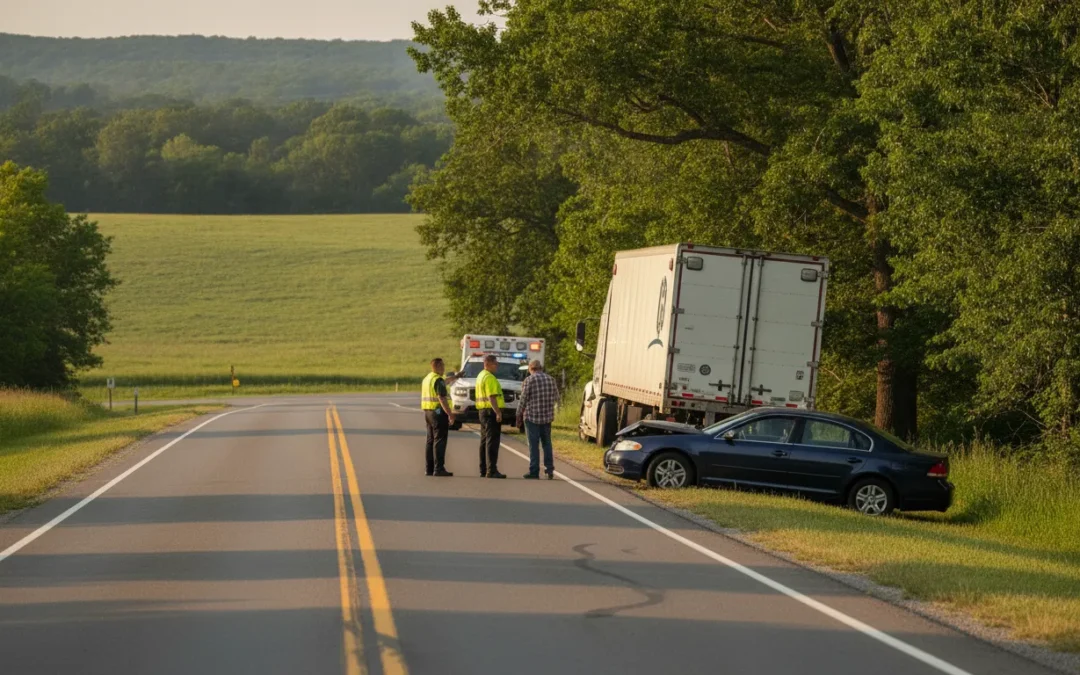
A truck crash can leave you dealing with injuries, traffic, insurance calls, and unanswered questions at the same time. In the first minutes, focus on staying safe and getting help. Later, preserve what you can remember and keep records of medical care, expenses, and communications.
Request a free, no-obligation case evaluation if you want to discuss your Kentucky truck crash with Rick Hessig Law.
A lexington truck accident lawyer may help you understand the evidence, insurance issues, and next steps in a Kentucky claim, but you can begin by protecting your health and documenting the crash.
This guide explains practical steps for Lexington readers. It covers what to do at the scene, when to seek medical care, which evidence may matter, and why a commercial carrier can make a claim more complicated. Rick Hessig Law serves people in Kentucky and Southern Indiana and offers a free case evaluation, without promising a particular result.
Before discussing insurance or legal questions, take a careful look at the immediate safety decisions that can protect you and others at the crash scene.
What to Do at the Scene After a Truck Crash in Lexington
A truck crash can leave you shaken, hurt, and unsure what to do first. Focus on immediate safety rather than deciding who was at fault.
Prioritize safety before evidence
- Check yourself and others for immediate danger. If anyone is trapped, bleeding heavily, having trouble breathing, or in another emergency, call 911 and clearly give your location in Lexington. Do not move an injured person unless remaining where they are creates a greater danger, such as fire, traffic, or leaking fuel.
- Move out of traffic only if you can do so safely. If your vehicle can be driven and moving it will not worsen an injury or create another hazard, get it to a safer location. Turn on your hazard lights. If you cannot move the vehicle, remain in a protected area when possible and follow instructions from emergency responders.
- Keep your seat belt on until it is safe to exit. Seat belts can save lives and reduce the risk of injury in a crash, according to the National Highway Traffic Safety Administration. Do not step into an active lane to take photographs or inspect damage.
- Call law enforcement and request medical help when needed. Tell the dispatcher that a truck and passenger vehicle are involved, describe visible injuries, and identify hazards. Even if you feel able to leave, get prompt medical evaluation after a serious collision. Guidance for truck crashes commonly recommends immediate medical care to assess injuries.
- Document the scene from a safe position. If you are physically able and it is safe, take photographs of the vehicles, roadway, traffic controls, visible damage, debris, and surrounding conditions. Do not risk standing near moving traffic or climbing onto a truck. Keep copies of scene photos and other records with your medical information and recovery costs.
- Exchange information without arguing about fault. Obtain the truck driver’s name, employer or carrier, vehicle details, insurance information, and license plate when available. Ask witnesses for their names and contact information. Let the responding officer document the collision, and avoid guessing about speed, fault, or the extent of your injuries.
For a deeper look at preserving truck-crash evidence, see this guide to Kentucky truck accident evidence and claims.
When Should You Get Medical Care After a Truck Crash?
Get medical care as soon as possible after a truck crash, even if your symptoms seem minor or you feel steady at the scene. The force of a commercial truck collision can leave injuries that are not obvious right away. A medical evaluation can identify concerns, create a record of what you report, and help you understand what follow-up care may be appropriate.
Seek medical attention immediately for your injuries.
Watch for symptoms that develop later
Some concussion and mild traumatic brain injury symptoms may appear immediately, while others may not appear for hours or days after the crash. The Centers for Disease Control and Prevention explains signs and symptoms of concussion, including changes that may not be noticed at first. Pay attention to worsening headaches, dizziness, confusion, unusual tiredness, trouble concentrating, memory changes, nausea, or changes in mood or behavior. Do not assume that a delayed symptom is unrelated simply because you felt fine after the collision.
Seek immediate emergency care if you experience danger signs such as a worsening headache, repeated vomiting, a seizure, slurred speech, increasing confusion, or difficulty waking up. If you are unsure what to do, contact a medical professional or emergency service rather than trying to evaluate the injury on your own. Do not drive yourself if your symptoms make driving unsafe.
Follow the instructions you receive and keep records of visits, diagnoses, prescriptions, referrals, and time missed from work. Tell each provider that the symptoms followed the truck crash, and describe when they began and whether they changed. Save discharge instructions and bills in one place. These records can help you and your medical providers track the situation while you consider your next steps.
What Evidence Matters in a Kentucky Truck Accident Claim?
Evidence can help show what happened, how the crash affected you, and which people or companies may need to be considered. Start with what you can safely preserve yourself, then keep the original files and records organized.
Document the scene and your injuries
If it is safe, take photos or video of the vehicles, roadway, traffic controls, visible damage, debris, and surrounding conditions. Try to capture more than the close-up damage. Wide shots can show lane positions, sight lines, lighting, and nearby signs. Do not enter traffic or return to an unsafe area to get a better image.
Keep medical records, discharge instructions, bills, prescriptions, and notes about symptoms and appointments. Save photographs of visible injuries and maintain a simple record of missed work or other recovery-related costs. These materials can give a clearer picture than memory alone, especially when pain or stress makes details difficult to recall.
Identify the truck, carrier, and available records
Write down the truck’s license plate, unit or trailer number, company name, and the driver’s information if you received it. Keep the exchange-of-information materials, police report, tow records, and any messages or calls from an insurer or trucking company. Ask witnesses for their names and contact information, and preserve any nearby business or doorbell-camera information you learn about.
Truck cases may also require looking beyond the collision photos. Depending on the circumstances, relevant questions can include the driver’s hours and fatigue, vehicle maintenance, inspection history, and the carrier’s role. The Federal Motor Carrier Safety Administration makes regulated-entity census and safety-performance information available to the public, including company, crash, inspection, and safety-measurement categories. That information can help identify the carrier and guide further investigation, but it does not by itself decide responsibility.
Preserve evidence promptly rather than deleting messages, editing original photos, or relying only on screenshots. A lawyer may also evaluate whether records held by a carrier or another party should be requested or preserved. For a more detailed discussion, see Kentucky truck accident evidence and claims.
How Commercial Insurance Can Change a Truck Accident Claim
A truck crash may involve more than a standard exchange of insurance information. Depending on the vehicle, driver, employer, and policy structure, the claim may involve a commercial carrier. a trucking company that retains risk itself, or more than one potentially responsible party. That does not mean every truck claim follows the same path. It means the insurance and evidence questions may need closer attention than they would after an ordinary passenger-vehicle collision.
| Ordinary auto handling | Commercial-carrier considerations |
|---|---|
| The claim may primarily involve the other driver’s personal auto insurer and the driver’s account of the crash. | The process may also require identifying the motor carrier, its insurer or claims administrator, and the driver’s role in the business. |
| Vehicle damage, medical records, photographs, and witness information are common starting points. | Additional records may matter, including driver-hours information, dispatch or work records, inspection materials, and maintenance history. |
| Early communications may focus on the basic collision facts and vehicle damage. | Communications may involve a commercial claims team and requests for statements or authorizations, making it important to understand what is being requested before responding. |
Commercial insurance does not automatically establish fault or determine what a claim is worth. It can, however, affect who receives notice, who investigates, and which documents may help explain what happened. For example, driver hours and possible fatigue may be relevant investigation topics. Maintenance practices may also matter if a mechanical condition is part of the crash investigation. These questions should be tied to the available facts rather than assumed from the fact that a truck was involved.
Public Federal Motor Carrier Safety Administration data includes company census, crash, inspection, and safety-measurement categories. That information can help identify a carrier and provide context, but it is not a substitute for investigating the specific collision. Keeping photographs, medical records, and other crash documents organized can make later conversations clearer.
For a broader explanation of related insurance steps, see this Kentucky auto insurance claim guide. If a commercial carrier contacts you after a Lexington crash, avoid guessing about technical details or signing unfamiliar documents before you understand their purpose. A prompt review by a Kentucky truck accident lawyer may help clarify what information should be preserved and which questions need answers.
When Should You Talk With a Lexington Truck Accident Lawyer?
You do not have to decide everything about a legal claim immediately after a truck crash. However, speaking with a Lexington truck accident lawyer can be useful when the collision caused significant injuries, fault is disputed, or a trucking company or insurer is already asking for information. An early conversation can help you understand what questions matter and what records may be important to preserve.
Signs that a legal conversation may help
Consider seeking guidance if you are dealing with ongoing medical treatment, missed work, vehicle damage, or uncertainty about who is responsible. You may also want help when more than one driver, company, vehicle owner, or insurance policy could be involved. Commercial truck claims can involve records and insurance arrangements that are different from those in an ordinary passenger-vehicle collision.
It is also reasonable to ask for guidance if an insurer wants a recorded statement, requests a broad medical authorization, or presents paperwork before you understand the full situation. That does not automatically mean the insurer is acting improperly. It means you should understand what you are being asked to provide before responding. You can review when to hire a car accident lawyer for additional questions to consider.
What a lawyer may investigate
A lawyer may review the crash report, photographs, medical records, witness information, and communications with insurers. In a truck case, the investigation may also examine the carrier’s identity, vehicle ownership, inspection history, maintenance records, and information about the driver’s hours and condition. Public Federal Motor Carrier Safety Administration data includes company, crash, inspection, and safety-measurement categories, although those records are only one part of a broader case review.
Ask practical fit questions before moving forward: Who will communicate with you? Who will investigate the crash? What information should you preserve? How are attorney fees explained, and which case or court costs could remain your responsibility? A free, no-obligation case evaluation can help you decide whether the firm’s approach fits your situation. No lawyer can promise that a case will be accepted or what result it may produce, but a careful review can give you clearer next steps.
Questions to Ask Before a Free Case Evaluation
A free evaluation should give you a clearer sense of what happened, what information may matter, and whether the lawyer’s approach fits your situation. You do not need to have every answer ready. Bring the facts you know, be honest about what you remember, and ask questions that help you understand the next step.
How will you investigate the truck crash?
Ask whether the lawyer will review the crash report, photographs, medical records, witness information, and the identity of the trucking company or carrier. You can also ask whether the investigation may include driver hours, maintenance history, inspection information, or other records that could be relevant to a commercial-truck collision. Federal Motor Carrier Safety Administration data includes company, crash, inspection, and safety-measurement categories, although every claim requires its own review.
Ask who will handle that work and whether you will communicate directly with the attorney or primarily with other staff. Direct communication can matter when your injuries, treatment, lost work, or concerns change over time. You may also want to ask what information you should preserve and how the firm prefers to handle contact from an insurer or trucking company. For related background, review what car accident insurance lawyers do.
How will we communicate, and does the case fit your practice?
Ask how often you should expect updates, whom to contact with questions, and whether the firm handles Kentucky truck-accident matters involving your type of injury and location. A lawyer should be able to explain the general process in plain language without promising that your case will be accepted or predicting a result.
What fees and costs should I understand?
Ask how attorney fees are arranged, what happens if the case does not resolve, and which expenses may arise during investigation or litigation. Rick Hessig Law uses the approved framing No Fee Unless You Win, but the Kentucky Bar disclosure still applies: case and court costs may be the client’s responsibility. Ask for the fee agreement and cost terms in writing, including any questions you have about the language.
When you are ready, you can request a free case evaluation and bring these questions with you.
How Rick Hessig Law Approaches a Kentucky Truck Crash
After a truck crash, you may want a clear explanation of what can be investigated and what choices come next. Rick Hessig Law serves people in Kentucky and Southern Indiana, including readers in the Lexington area, with a local approach to injury cases. The firm focuses on understanding the person’s situation rather than treating the initial call as a handoff to a distant intake center.
Rick Hessig is a Kentucky attorney and a Licensed Professional Private Investigator. That background supports an evidence-focused approach to a truck crash. Depending on the circumstances, a review may involve the collision scene, medical records, vehicle and company information, witness accounts, and issues involving the carrier. The goal is to organize the available facts and identify questions that may need further investigation.
Direct attorney involvement can also make communication more straightforward. You should be able to discuss what happened, ask how the firm would approach the evidence, and understand what information is still needed before deciding whether legal help is right for you. A truck crash does not automatically mean that every claim will be accepted, and no attorney can promise a particular result. The facts, injuries, available evidence, and legal issues all matter.
If you are comparing options, you may find it useful to review these questions to ask an accident lawyer before requesting an evaluation. They can help you focus on investigation, communication, fees, and whether the firm’s approach fits your needs.
When you are ready, the next step is a conversation about your specific crash and circumstances. A free case evaluation can help you learn whether Rick Hessig Law may be able to assist, without requiring you to make a decision before you have basic information.
Request a free case evaluation when you are ready to discuss your Kentucky truck crash.
Frequently Asked Questions
What should I do if I feel fine after a truck crash?
Pay attention to your health even if you feel fine at first. Some concussion symptoms may appear hours or days after an injury. Seek medical attention immediately for your injuries. Follow the medical provider’s instructions, keep your records, and seek emergency care for danger signs such as a worsening headache, repeated vomiting, confusion, seizures, slurred speech, or inability to wake.
How can I preserve evidence after a Lexington truck accident?
If it is safe, photograph the vehicles, roadway, traffic controls, visible injuries, and surrounding conditions. Save medical records, bills, repair information, wage-loss records, and the names of witnesses. Keep the truck driver’s and carrier’s information. Do not delete photos or posts about the crash, and avoid guessing about fault when speaking with an insurer.
Why can a truck claim involve more than one insurance company?
A commercial truck may involve a carrier, a separate owner, a maintenance provider, or other businesses. The carrier may also use a commercial policy or a self-insurance arrangement. Driver hours, maintenance, inspection, and company records may matter, so avoid signing a release or giving a recorded statement before you understand what is being requested.
What should I ask before choosing a truck-accident lawyer?
Ask who will personally handle your case, how the investigation will be managed, what communication you can expect, and how the firm handles commercial-insurance issues. Ask for a clear explanation of the fee agreement and costs. A free case evaluation does not guarantee representation or a result, and case and court costs may be your responsibility.
Get started with a free case evaluation
If you were hurt in a Kentucky truck crash, a conversation about the available information and your next steps may help you move forward with greater clarity. Rick Hessig Law offers a free, no-obligation case evaluation. No fee is charged unless you win, although case and court costs may be your responsibility. Request your free case evaluation to speak with the firm about your situation.