
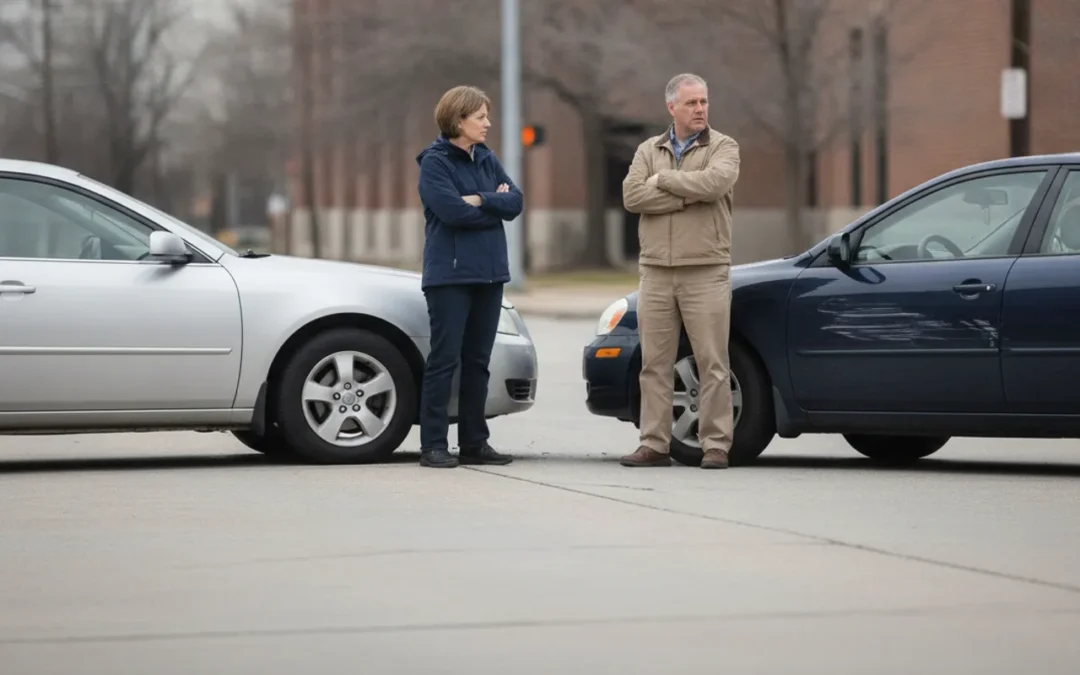
A sideswipe can look minor at first, yet leave you with injuries, repair bills, and conflicting accounts of who moved into whose lane. A sideswipe accident attorney may help you understand what evidence matters and what options you can consider. If you are in Louisville or elsewhere in Kentucky, you do not have to sort through every question alone.
Talk with Rick Hessig Law about your next step
Why can a sideswipe crash be hard to explain?
A sideswipe happens when the sides of vehicles make contact, often while they are traveling beside one another. It may happen during a lane change, when a vehicle enters a road, or when two vehicles move toward the same space. The contact can leave marks along a door, fender, mirror, or side panel. That damage may help show where the vehicles touched, but it does not always tell the whole story by itself.
Drivers may remember the same moment differently. One person may say the other car drifted over. The other may say they were already established in the lane. A witness may have seen the impact but not what happened seconds before. If no one stopped to record details, the accounts can be difficult to compare later.
Lane-change crashes are a recognized collision type in safety research. The National Highway Traffic Safety Administration’s analysis of lane-change crashes and near-crashes examines how these events occur. For an individual claim, however, the useful question is what the available evidence shows about that particular roadway, vehicle movement, and point of contact.
A lawyer cannot promise that any one photo or account will decide fault. The goal is to gather and evaluate information before it is lost, identify unanswered questions, and explain how those facts may affect a claim. Rick Hessig is both an attorney and a Licensed Professional Private Investigator; that investigator background can inform evidence review and case development.
What should you do after a sideswipe crash?
Start with immediate safety and health. Move to a safe place if you can do so without creating another hazard. Call 911 when emergency or police assistance is needed. Seek medical attention immediately for your injuries. Even if you feel able to leave the scene, do not ignore symptoms or assume that a damaged vehicle tells you whether you were hurt.
When it is safe, record what you can while the details are fresh. You can use this checklist:
- Photograph the vehicles from several angles, including close views of the contact marks and wider views that show each vehicle’s position.
- Capture lane markings, traffic signals, signs, road conditions, debris, and nearby entrances or exits. Include landmarks that can help identify where the impact happened.
- Write down the time, direction of travel, weather, and a plain description of what you recall before, during, and after contact.
- Ask witnesses for names and contact details, if they are willing to share them. Make a note of what each person says they saw without coaching or debating.
- Exchange the information required at the scene and keep a copy of any report or incident number you receive.
- Save tow, rental, repair, medical, and other accident-related records. Keep receipts and note dates, calls, and claim reference numbers.
Do not put yourself in traffic to take a photograph, and do not move a vehicle if doing so would be unsafe. If you need a fuller scene checklist, see this guide to steps to take after a car accident. You can also read what to consider when reporting a car accident.
Make a timeline while your memory is fresh
Later that day, or as soon as you are able, make a short timeline in your own words. Start with where you were traveling and which lane you occupied. Note whether you recall signaling, braking, turning, or seeing the other vehicle before impact. Then record what happened immediately afterward, including where both vehicles stopped and who spoke with you. Mark details you are uncertain about instead of filling gaps with guesses.
Keep this private working note with the claim papers, and add the date when you update it. If you remember another detail later, add it as a separate note rather than rewriting the original account. This simple habit makes it easier to distinguish what you recalled at the scene from what you learned afterward.
What evidence may help explain a sideswipe?
Evidence is most useful when it helps answer a specific question: where were the cars, how were they moving, and when did contact occur? No single item necessarily answers everything. Preserve original photos and files when possible, and avoid editing or adding captions that could obscure when or where they were taken.
| Evidence | What it may help clarify | Practical next step |
|---|---|---|
| Vehicle damage and paint transfer | Where the vehicles touched and the direction of visible scraping | Take close and wide photos; keep repair estimates and invoices |
| Scene photos or video | Lane layout, signs, sight lines, traffic, and vehicle positions | Save original files and note when and where each was made |
| Witness accounts | What someone observed before or during the impact | Record contact information and the witness’s own description |
| Police or incident report | Recorded statements, parties, location, and responding officer observations | Request or retain the report information; check it for factual errors |
| Medical and expense records | When care began and how the crash affected treatment or finances | Keep visit summaries, bills, receipts, and missed-work records |
| Vehicle or roadway video | Movement or timing that may not be visible in still photos | Identify possible sources promptly and ask how footage can be preserved |
Some video may be overwritten, and people may forget details as time passes. Do not assume a particular camera exists or that you can obtain footage on your own. An attorney can discuss whether there may be useful sources and what steps are appropriate for preserving or requesting evidence.
Think about the evidence in layers. A close photo may show a scrape, while a wide photo places that scrape in context with the roadway. A report may document what each driver said, but it may not resolve which account is accurate. A witness may describe movement but have a limited view. Comparing these sources can reveal whether they support one another or leave important gaps.
Keep damaged parts, repair paperwork, and photographs together if practical. If you are unsure whether to repair, tow, or keep a damaged vehicle, this article explains what to consider about your car after an accident. Do not delay a necessary repair just to preserve evidence; document the damage first when safe and follow the repair shop’s guidance.
What details about the road and vehicle positions matter?
Sketch a simple diagram if it helps you remember the scene. Mark the travel direction, lanes, nearby intersection or entrance, and the approximate point where contact occurred. Use labels such as “my car” and “other vehicle,” and indicate only what you actually recall. A rough diagram is a memory aid, not a technical reconstruction, so do not treat it as proof of exact distances or speeds.
Describe conditions that could affect what a driver could see, such as heavy traffic, a curve, rain, glare, construction, or a vehicle blocking the view. If the crash occurred near a merge or exit, note that location as well. Do not assume those conditions establish fault; they are context that may help someone understand the accounts and other evidence.
How should you handle insurance contact?
Notify the appropriate insurer and follow the instructions in your policy. Keep a record of when you reported the crash, who you spoke with, and any claim number. Give accurate information. If you do not know an answer, it is fine to say you are unsure rather than guess about speed, distance, or the other driver’s actions.
An insurer may ask for a recorded statement, documents, or an inspection. Before agreeing to a recorded statement or signing a release, make sure you understand what is being requested and how it may be used. You can ask for the request in writing and take time to review it. Avoid accepting or rejecting a settlement based only on pressure to decide quickly. A settlement can involve giving up further claims, so understand the terms before signing.
Use a simple contact log. For each call or message, note the date, the person’s name, the insurer, the claim number, and what was requested or promised. If you send documents, record what you sent and how. Save letters, emails, estimates, and claim forms in one folder. That record can help you avoid repeating information and see which questions remain unanswered.
For a step-by-step overview, read about handling an auto insurance claim after a Kentucky crash. If the other driver may not have enough coverage, this resource explains how an underinsured-driver claim may work in Kentucky. Coverage and claim options depend on the policy and circumstances, so do not assume that the same answer applies to every crash.
How can you track injuries, expenses, and disruptions?
A sideswipe claim may involve more than the visible repair. Keep records that help you understand the practical effects of the crash over time. Medical paperwork can show appointments and recommendations. Receipts may document transportation, prescriptions, or other expenses you paid. If you miss work or need help with ordinary tasks, make a dated note of what changed and keep any related records you receive.
Keep the records organized by type rather than trying to reconstruct everything later. For example, use separate folders for medical care, vehicle repair, insurance communications, and work-related documents. A short note beside an expense can explain why it relates to the crash. Do not alter bills or create estimates from memory; preserve the source documents and identify any amount you are still checking.
This organization does not determine whether an expense is covered or what a claim may be worth. It gives you a clearer account to discuss with an insurer or attorney. If you are unsure whether to keep a document, saving it until you receive guidance is generally more useful than throwing it away.
When may a sideswipe accident attorney help?
You may want to speak with an attorney if you were injured, fault is disputed, the insurance company questions what happened, or you are unsure how to document expenses and losses. A conversation may also be useful when several vehicles were involved, a witness or video could be important, or you are being asked to make a decision before you understand the paperwork.
An attorney can review available information, explain potential next steps, communicate about the claim, and help identify evidence that may need follow-up. The attorney should also explain what is still uncertain. A case evaluation is not a guarantee of representation, a settlement, or a particular result.
Ask direct questions before you decide what to do:
- Who will review the facts and communicate with me about my case?
- What information should I gather or preserve next?
- What parts of fault or insurance coverage remain uncertain?
- How does the fee arrangement work, and what costs may I be responsible for?
- What decisions might require my approval?
Rick Hessig Law serves car-accident victims in Louisville and Kentuckiana. Rick Hessig is personally involved as an attorney, with a professional private-investigator license that supports an investigative approach to case development. The firm’s stated fee structure is “No Fee Unless You Win,” with no upfront attorney fee. In accordance with KBA regulations, we must inform you that case and court costs may be the responsibility of the client. Ask for an explanation of how that applies before deciding whether to proceed.
If you are in Southern Indiana, clarify where the crash occurred and what representation is available. Rick Hessig is licensed in Kentucky; the firm cannot represent someone in another state unless associated with local counsel. You can learn more about how no-win, no-fee claims work in Kentucky and factors that can affect a car accident claim.
What should you avoid after a sideswipe?
- Do not guess about details you cannot remember. Separate what you observed from what you assume.
- Do not argue with the other driver at the scene or post blame, photos, or speculation about the crash on social media.
- Do not discard photographs, receipts, estimates, or messages related to the collision.
- Do not sign a release or accept payment without understanding what claims it resolves.
- Do not assume a lack of dramatic vehicle damage means there is no injury, or that visible damage alone proves fault.
These are practical cautions, not a substitute for advice about your specific situation. If a medical issue is urgent, prioritize care. For a general overview of what happens in a claim, you may also find this guide to car accident settlement expectations useful.
Frequently asked questions
Does side damage prove who caused a sideswipe?
Not by itself. Damage location and scraping may provide clues about contact, but a fair review may also consider vehicle movement, road layout, witness accounts, and other available evidence. The meaning depends on the facts of the specific crash.
Should I call an attorney if I feel fine after the crash?
Pay attention to your health and seek medical attention immediately for your injuries. If you later have questions about fault, an insurance request, or a claim, you can ask an attorney to explain possible next steps. No one can assess a claim reliably from vehicle damage alone.
Can an attorney help if the other driver denies changing lanes?
An attorney may review the evidence and help you understand how conflicting accounts can be evaluated. Photos, damage, witnesses, reports, and video may each provide part of the picture. Whether any item is available or useful depends on the circumstances.
What if the crash happened in Southern Indiana?
Tell the attorney where the crash occurred and ask about licensing and representation before moving forward. Rick Hessig is licensed in Kentucky, and the firm cannot represent someone in another state unless associated with local counsel.
Does “No Fee Unless You Win” mean there can never be costs?
No. The firm states that there is no upfront attorney fee under its contingency arrangement, but case and court costs may be the client’s responsibility. Ask for the specific terms and an explanation of costs before making a decision.
Request a free, no-obligation case evaluation
Talk through your next step
A sideswipe can leave important details unclear, but careful documentation and a measured review can help you make informed decisions. If you have questions about a Kentucky crash, request a free case evaluation and ask what information may help explain what happened.