
Car accident claims can feel like a maze when you are dealing with injuries, missed work, vehicle damage, and calls from insurers. Knowing the usual stages can help you keep useful records and make informed decisions after a Kentucky crash. The process is not identical for everyone, but the same basic habits—getting care, preserving information, and reading documents carefully—can help you stay organized.
Request a free case evaluation
What are the key stages of a Kentucky car accident claim?
Most claims move through several connected stages: immediate safety and documentation, medical care, insurance notice and investigation, evaluation of losses, negotiation, and resolution. The sequence can vary. Some matters are straightforward; others involve disputed fault, ongoing treatment, or several insurance policies. A claim does not follow a guaranteed timetable or outcome.
Here is a practical overview of how those stages fit together. A stage may overlap with another: for example, an insurer might inspect a vehicle while you are still receiving treatment.
| Stage | What may happen | What you can do |
|---|---|---|
| At the scene | People exchange information and the collision is documented | Get to safety, request help when needed, and preserve photos and witness details |
| Medical care | Injuries are assessed and treatment continues | Seek care and keep appointment, prescription, and expense records |
| Claim notice and review | Insurers gather statements, records, and evidence | Share accurate basic information and keep copies of communications |
| Evaluation and negotiation | Responsibility and claimed losses are assessed; settlement discussions may occur | Review the terms and supporting information before deciding what to do |
| Resolution or further steps | A claim may resolve, remain under discussion, or require additional action | Understand any release or other documents before signing |
What should you do first after the crash?
Start with safety. Move out of traffic if you can do so safely, call emergency services when necessary, and follow instructions from responders. Exchange names, contact details, vehicle and insurance information with the other driver. Avoid arguing about fault at the scene. A brief factual account is more useful than speculation.
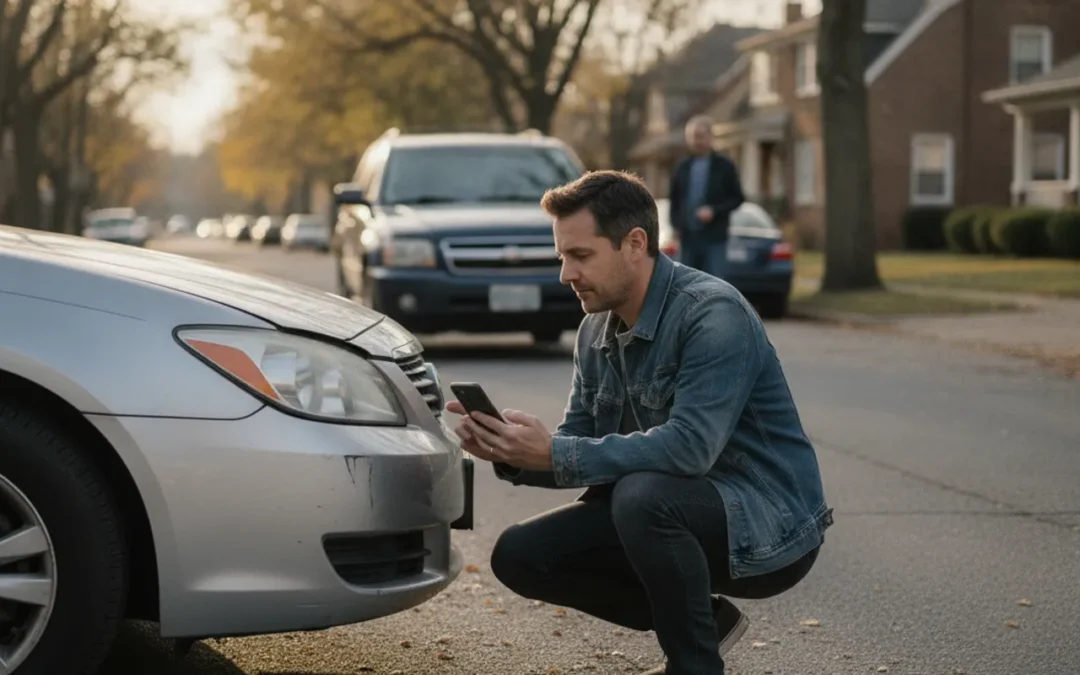
If it is safe, take photographs of vehicle positions, damage, road conditions, traffic controls, and visible injuries. Note the time and location and get contact details for witnesses. Preserve any dash-camera footage before it is overwritten. Photograph the wider scene as well as close details: lane markings, nearby signs, debris, and the direction each vehicle was traveling can provide useful context later.
A police report may document observations and statements, but it may not answer every question about how the crash happened. Make a note of the responding agency and how to request a copy. Do not assume the report is the only evidence worth keeping. For a fuller checklist, see what to do after a car wreck and how to report a car accident.
How does medical treatment fit into the claim?
Medical care is for your health first. Seek medical attention immediately for your injuries. Some symptoms may become noticeable after the collision, so tell a healthcare professional what happened and describe your symptoms accurately. Follow the care plan you receive and ask your provider about questions or changes.
Keep copies of visit summaries, bills, prescriptions, referrals, and treatment dates. If you have difficulty attending an appointment or following a recommendation, let the provider know and keep a record of the reason. These materials can help explain the care you received and the expenses you are claiming. Do not delay necessary care simply because you are unsure how an insurer will handle a bill.
Medical records should be accurate and complete. Do not exaggerate symptoms or assume that a single document tells the entire story. Keep your own simple symptom notes if useful: when a problem occurs, what activity affects it, and what care you sought. These notes do not replace medical records, but they may help you recall details when speaking with a provider. If you need broader guidance, read what to do about car accident injuries in Kentucky.
What happens when you notify an insurance company?
Insurance notice and claim investigation often happen while treatment is ongoing. An insurer may ask for the collision details, inspect vehicle damage, request records, or seek a statement. Provide truthful information, keep notes about dates and names, and save letters, emails, and claim numbers. If you have more than one potentially relevant policy, make a list of the insurer and contact information for each rather than relying on memory.
Be cautious about guessing when you do not know an answer. You can ask what information is being requested, why it is needed, and how to provide it. Before giving a recorded statement or signing a broad medical authorization, make sure you understand the request and its scope. Do not ignore communications, but you do not have to make a decision on the spot simply because someone asks for one.
A good claim file can be as simple as a folder or a secure digital location. Keep the original documents and use a brief call log with the date, person, company, and what was discussed. After a phone call, note any promised follow-up and the date you expect it. If an estimate or form changes, retain both versions so you can see what was revised.
Kentucky State Police publishes annual crash facts, including statewide crash information; its 2024 report provides broader road-safety context, not a finding about any individual collision.
How are fault and losses evaluated?
The insurer may compare accounts, photographs, the crash report, witness information, vehicle damage, and other available evidence. Keep original files when possible and make a dated note of what each image or document shows. If accounts conflict, separate what you personally observed from what someone else told you. A clear timeline can help you identify gaps: when you first noticed a symptom, when you reported the crash, and when key conversations occurred.
A claim may include different kinds of documented losses, such as medical expenses, lost income, and vehicle-related damage. The exact issues depend on the facts, coverage, and applicable law. For income records, retain pay statements, schedules, or employer communications that show time missed, if relevant. For vehicle losses, keep estimates, invoices, towing receipts, and rental paperwork. These records help make the request specific rather than relying on an approximate total.
Do not treat an early estimate as a final accounting if treatment is continuing or the full extent of a loss is not yet clear. Keep new bills and records as they arrive. A claim review may also consider whether more than one person or circumstance contributed to the crash. Learn more about how shared fault may affect a Kentucky claim.
What happens during settlement discussions?
After reviewing available information, an insurer may make an offer or ask for more documentation. Compare any proposed resolution with the losses and records being considered. Ask what the offer covers, whether it includes all claimed damages, and whether accepting it requires signing a release. A signed release can affect the ability to pursue further payment for the matters it covers, so understand the terms before agreeing.
Take time to read the full paperwork, not only the payment amount. Check which claims and parties the document addresses, whether it includes conditions, and whether the stated amount matches the offer you discussed. If a term is unclear, ask for an explanation before signing. You can also ask how outstanding bills or unresolved vehicle issues are expected to be handled. For more on the document itself, see what to consider before signing a Kentucky settlement release.
There is no reliable universal settlement amount or timeline. The facts, evidence, treatment, insurance coverage, and disagreements all matter. An early offer may arrive before all the relevant information is assembled; that does not by itself tell you whether it is adequate. You can review what to expect from a car accident settlement.
What if the claim does not resolve quickly?
Some claims take longer because treatment is ongoing, evidence is incomplete, fault is disputed, or the insurer needs additional review. Keep following up on outstanding requests, maintain a claim file, and update your records as new bills or information arrive. Save copies rather than relying only on a phone conversation. If you send documents, record what you sent and when, and keep proof of delivery when available.
When a request is unclear, ask the insurer to identify the specific item it needs and the preferred way to provide it. If you disagree with a description of events or a loss calculation, respond with a concise explanation and documents that support your account. Avoid sending originals unless required, and keep a copy of everything you submit. A written timeline can help you spot missing information and explain the sequence without having to reconstruct it from memory.
If discussions stall or the issues are difficult to evaluate, a lawyer can review the available records, explain possible options, and communicate with the insurer. A review does not promise that an insurer will change its position or that a particular result will follow. Rick Hessig Law focuses on car accident cases in Louisville and the Kentuckiana area, including Southern Indiana. Ask about the geographic scope of representation if your crash or claim involves another state.
What should you organize before asking for help?
You do not need to have a perfect file or wait until every bill arrives before asking questions. Start with what you have, and note what is missing. A few organized records can make an initial conversation easier and help identify what may need follow-up.
- Crash date, location, and a short factual description.
- Driver, witness, and insurance contact information you have collected.
- Photos, video, police report details, and claim numbers.
- Medical records, bills, prescriptions, and treatment dates.
- Repair estimates, towing or rental records, and proof of missed work, if relevant.
- Letters, emails, forms, and notes of calls with insurers.
- A short list of questions or concerns you want to discuss.
Put the documents in date order if possible. A short index—such as “crash photos,” “medical,” “vehicle,” and “insurance”—can save time when someone asks for a particular item. Do not alter original photographs or discard paperwork that seems repetitive; a later estimate or corrected bill may explain a change. See the car accident checklist for additional ways to keep details together.
When may a lawyer help with a claim?
A lawyer may be useful when you have questions about responsibility, injuries, communications, or documents you are asked to sign. This can be especially relevant when accounts conflict, several insurers are involved, or you are unsure how to evaluate a proposed resolution. You can ask what information would help review the situation and what possible next steps are available.
At a free case evaluation, you can describe what happened and share the records you have. Ask who will handle communications, how updates are provided, and how fees and expenses work. Rick Hessig Law describes its fee arrangement as “No Fee Unless You Win” with no upfront attorney fee; in accordance with KBA regulations, case and court costs may be the responsibility of the client. The terms of any representation should be explained before you decide whether to proceed.
Frequently asked questions
How long does a Kentucky car accident claim take?
There is no single timeline. The time can depend on treatment, evidence gathering, insurance review, and whether fault or the amount of a loss is disputed. Keep records current and ask what remains outstanding rather than assuming an early offer reflects every issue.
Should I accept the first insurance offer?
Consider what the offer covers and what documents or release terms accompany it. If you do not understand the terms or whether important losses are accounted for, get clarification before deciding. You can ask for time to review the paperwork.
What if the crash report does not match my recollection?
Keep a copy and make a calm, factual note of what you believe is inaccurate and why. Preserve supporting material, such as photographs or witness information. A report can be one piece of the record, not necessarily the entire account.
Can I ask a lawyer to review my situation?
Yes. You can request a free, no-obligation case evaluation to discuss the facts and possible next steps. No particular result or representation is guaranteed. In accordance with KBA regulations, case and court costs may be the responsibility of the client.
Talk with Rick Hessig Law about your next step
Talk through your next step
Knowing the stages can help you preserve information, stay organized, and ask clearer questions while your claim is under review. If you have been injured in a Kentucky crash, request a free case evaluation to discuss your situation and possible next steps.