
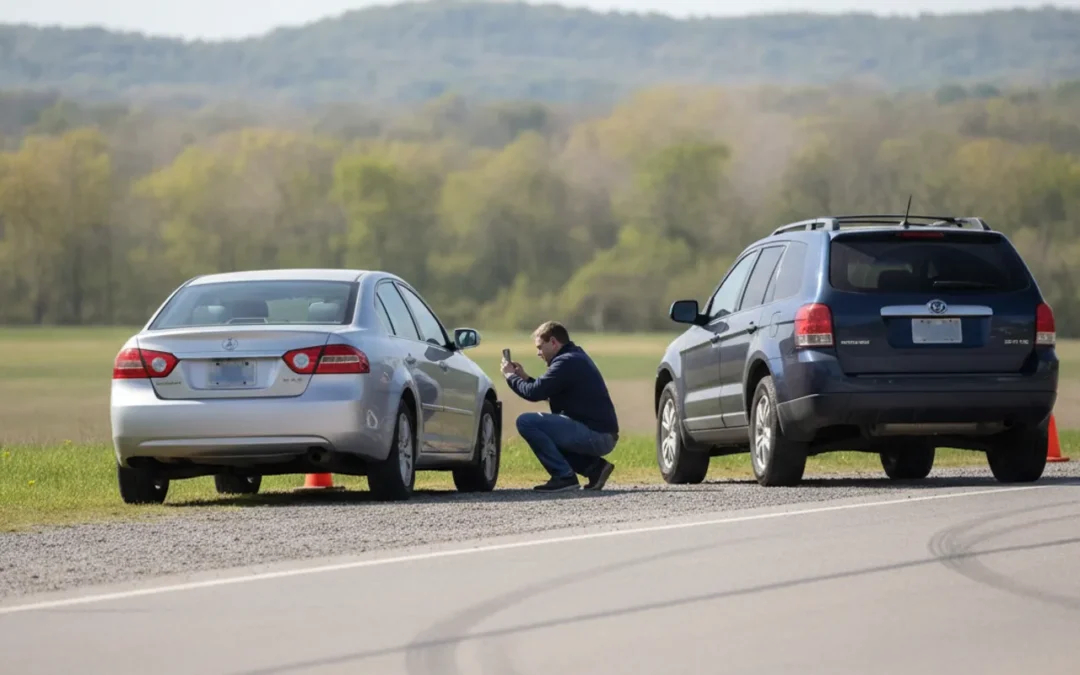
After a crash, it is common to hear different versions of what happened. If you are wondering how to prove fault in a car accident, start by preserving reliable evidence rather than trying to win an argument at the scene. Photos, witness details, the crash report, vehicle damage, and records made soon after the collision may help explain how it occurred. You do not have to investigate everything alone.
Request a free, no-obligation case evaluation
What does it mean to prove fault after a car accident?
Proving fault means gathering information that helps explain what each person did before and during the collision. Evidence can show the direction and speed of travel, where the vehicles were, what a driver could see, and whether someone had time to react. It may also help rule out a mistaken assumption about the crash.
There is rarely one piece of evidence that answers every question. A photograph may show where a vehicle came to rest, but not necessarily how it got there. A witness may describe a signal or a lane change, but may have seen only part of the event. Looking at several sources together is often more useful than relying on one account.
Responsibility may be disputed by drivers, insurers, or other people involved. The job is not to force a conclusion from incomplete information. It is to preserve what can be checked and let the available evidence build a fuller account. The facts can be complicated, especially when the collision involves several vehicles, an unclear intersection, or conflicting statements.
Which evidence may help show how a crash happened?
Useful evidence can come from the scene, people who saw the collision, the vehicles, and records created afterward. Each source has strengths and limits. Here is a practical comparison:
| Evidence | What it may help show | What to keep in mind |
|---|---|---|
| Scene and vehicle photographs | Vehicle positions, damage, debris, road layout, signs, and visible conditions | Images capture a moment and angle; they may not establish what happened before impact. |
| Witness accounts | What a person saw or heard before, during, or just after the crash | Ask for contact details and an account in the witness’s own words; avoid coaching or arguing. |
| Crash report | Recorded driver and vehicle information, scene observations, and statements collected by responding officers | It is a useful record, not necessarily a final decision about every disputed fact. |
| Vehicle and roadway evidence | Impact locations, damage patterns, debris, marks, and possible points of contact | Damage can be altered by repairs, towing, or later handling; preserve records and images. |
| Medical and expense records | When symptoms were reported, care received, and how an injury affected daily life | These records document injury and its effects; they may not by themselves identify the driver who caused the crash. |
| Phone, camera, or business video | A time-stamped view of part of the roadway or events leading up to impact | Footage may be overwritten, so note where a camera is located and act promptly to preserve it. |
How can photos and video preserve the scene?
If you are able and it is safe to do so, take photographs before vehicles or objects are moved. Do not put yourself in traffic or delay getting help to take pictures. Photograph the overall scene from a safe position, then capture details that might otherwise be hard to remember.
- Take wide views showing the roadway, intersection, lanes, nearby signs, traffic signals, and the vehicles’ positions.
- Photograph each vehicle from several angles, then take closer images of the damaged areas, broken lights, and other visible marks.
- Capture skid or tire marks, debris, damaged property, weather or visibility conditions, and obstructions that may affect what a driver could see.
- If a traffic light, sign, or road feature matters, photograph it in context and close enough to identify it.
- Keep original files where possible. Avoid cropping, marking up, or filtering the only copy.
When the scene cannot be photographed, write down what you remember as soon as you can. Note the time, direction of travel, lane, weather, lighting, traffic, and where each vehicle was. Separate what you personally observed from what someone else told you. Memories can change, and a clear note made close to the event can help you explain your recollection later.
For a broader sequence of practical steps after a collision, see this car accident checklist. If you have questions about reporting and documenting a crash, the guide to how to report a car accident may also help.
Why should you collect witness information?
People who saw the crash may recall details that the drivers did not. A witness might have noticed a vehicle entering an intersection, a signal changing, a sudden lane movement, or the position of the cars just before impact. Their account can be especially useful when the drivers remember events differently.
If someone offers help, ask for their name and a reliable way to contact them. You can politely ask what they observed, but let them describe it in their own words. Do not suggest what they should say or pressure them to take a side. Write down where the person was standing or traveling and whether anything blocked the view. If they cannot stay, ask whether they are willing to be contacted later.
Passengers may also have information, but it is useful to distinguish what they saw from what they learned afterward. Record the date and time of your conversation and keep any messages. Do not edit a witness’s words into a stronger claim than they made.
What can a crash report tell you—and what can it miss?
A crash report can help organize basic information: the people and vehicles involved, where and when the collision occurred, observations made at the scene, and statements collected. Keep the report information with your other records, and check it for errors in names, contact information, vehicle details, or the description of the location.
A report is one source, not a complete reconstruction of every moment. An officer may arrive after vehicles have moved or after witnesses have left. A report may record statements that were brief or made while people were shaken. If something appears wrong or incomplete, preserve the report and make a separate note describing the specific concern. Do not alter the document.
The University of Kentucky’s motor vehicle injury resource reports more than 130,000 collisions on Kentucky roadways, including fatal and nonfatal collisions. That statewide context underscores why the details of an individual crash should be documented carefully; a statewide total does not determine who caused a particular wreck. Read the Kentucky Injury Prevention and Research Center’s motor vehicle injury resource.
How can vehicle damage and other physical evidence help?
Damage locations may help explain where vehicles made contact and how they were positioned. Photographs taken before repairs, tow records, and repair estimates can preserve details that may later be harder to see. Keep receipts and written communications about towing, storage, inspection, or repairs. If the vehicle is moved or repaired, keep dated photographs and copies of the relevant records.
Other physical details may matter too. Debris, broken vehicle parts, marks on the pavement, and damage to barriers or nearby property can help identify a point of impact or the vehicles’ paths. Note where these items were found, but do not pick up debris or enter a dangerous roadway. Let appropriate responders handle hazards.
Do not assume that the most heavily damaged vehicle was automatically driven by the person at fault. Damage may reflect the angle or force of impact, but it has to be considered with the full account. The same caution applies to a vehicle’s final resting place: a car may have moved after impact or been repositioned for safety.
If you are unsure what to do with a damaged vehicle, review what to do with your car after an accident. If the other driver does not have insurance, the steps for an uninsured driver claim in Kentucky may be relevant to a different part of the problem.
How do medical and insurance records fit into the evidence?
Medical records can document when you sought care, what symptoms you reported, and what treatment was recommended. They are evidence about your injuries and their effects, not a substitute for evidence about the crash itself. Keep appointment summaries, bills, instructions, and records of how symptoms affect work or everyday tasks. Describe symptoms honestly and consistently to medical professionals.
Seek medical attention immediately for your injuries. If you are focused on the collision, it can be easy to overlook a problem or delay asking for help. Follow the advice of your health care provider and keep copies of records you receive.
Insurance records may include claim numbers, adjuster contact details, written questions, estimates, and communications about the collision. Keep a dated record of calls and save letters, emails, texts, and documents. You can provide accurate basic information, but avoid guessing about details you do not know. If you need help organizing the insurance process, see how to handle an auto insurance claim after a Kentucky car accident.
What should you do when the accounts disagree?
Disagreements do not mean that evidence is useless. They make careful documentation more important. Write down what you remember without changing it to match someone else’s version. Mark uncertain details as uncertain. Preserve photographs and records, and keep a list of people who may have relevant information.
Do not confront the other driver or post accusations online. A heated exchange can add stress without clarifying what happened. Avoid signing a statement you do not understand or agreeing that a particular version is correct just to end a conversation. If an insurer asks for information, be truthful and do not speculate. You may ask for questions or requests in writing so you can review them carefully.
When people disagree about a collision, evidence about each driver’s actions may matter. The general guide to how shared fault may affect a Kentucky car accident claim discusses that issue separately. A specific conclusion depends on the facts, and this article cannot determine fault in your case.
What evidence should you preserve first?
When you are hurt or overwhelmed, start with a short list. You do not need a perfect file before you ask for help. Preserve what is available and note what still needs follow-up.
- Take care of immediate safety and health. Get to a safe place, contact emergency services when needed, and seek medical attention for injuries.
- Save scene evidence. Keep original photos and videos, and write down what you remember while the details are fresh.
- Collect contact information. Record the other driver’s details and ask witnesses for their names and contact information when it is safe.
- Keep the report and claim information. Save any report details, claim numbers, insurer letters, and notes of conversations.
- Document injuries and expenses. Keep medical paperwork, receipts, and a simple dated note about symptoms and disruptions to normal activities.
- Track video or other evidence that may disappear. Note the location of nearby cameras and the time window that may contain footage. Do not try to access a recording without permission.
For more on immediate next steps, read what to do after a car wreck. A record does not need to be elaborate: dates, names, copies of documents, and a few clear notes can be more useful than trying to remember everything later.
When may a car accident lawyer help review evidence?
You may want legal guidance if the insurer disputes responsibility, the crash caused significant injuries, several drivers were involved, important evidence may disappear, or you are unsure what to do with a request for a statement or records. These are reasons to ask questions, not guarantees about what a lawyer can do or how a claim will turn out.
A lawyer can review available information, identify unanswered questions, and explain possible next steps. Rick Hessig is a Kentucky attorney and Licensed Professional Private Investigator. His investigator background can inform evidence review and case development. The firm serves injured people in Louisville and Kentuckiana, including Southern Indiana, within its applicable licensing limits. You can read more about what auto injury lawyers actually do or about when to consider hiring a car accident lawyer.
Rick Hessig Law offers a free case evaluation and handles injury cases on a contingency basis: “No Fee Unless You Win,” with no upfront attorney fee. In accordance with KBA regulations, we must inform you that case and court costs may be the responsibility of the client. An evaluation does not promise that the firm will accept a case or that a particular result will occur.
Talk with Rick Hessig Law about your next step
Frequently asked questions
Can I prove fault if there were no witnesses?
Possibly. Witnesses are only one type of evidence. Photos, vehicle damage, the crash report, video, and records may help explain what happened. The available evidence and its limitations matter in each case.
Does a crash report automatically decide who was at fault?
No. A report can provide valuable information about the scene and the accounts gathered, but it may not resolve every disputed detail. Review it alongside photographs, witness information, and other available records.
What if I did not take pictures at the scene?
Preserve other evidence you have. Save photos taken later, repair and tow documents, messages, medical records, and contact details for witnesses. Write down your recollection and identify any nearby cameras that may have captured the collision.
Should I admit fault at the scene?
Be courteous and exchange accurate information, but do not guess about what caused the crash or accept blame just to settle a disagreement. Describe what you know honestly and leave uncertain details as uncertain.
Talk through your next step
Evidence can take many forms, and no single photograph, report, or statement necessarily tells the whole story. Preserve what you can safely collect, keep records organized, and ask for guidance if the facts or the insurance process feel unclear. You can request a free, no-obligation case evaluation to discuss the evidence and possible next steps.