
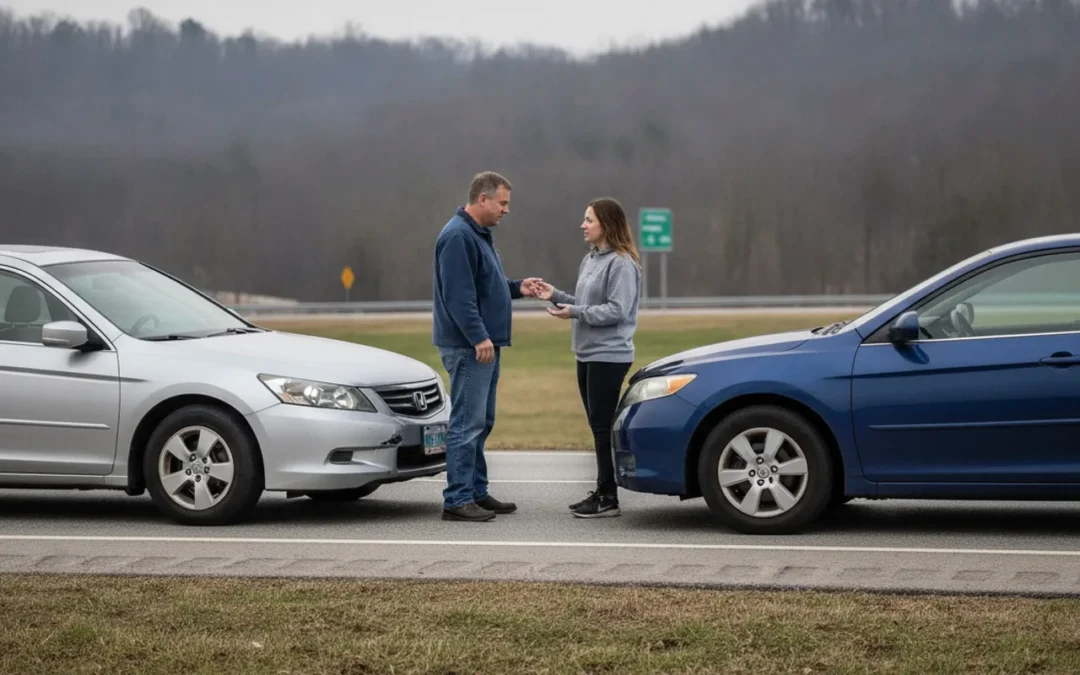
If you are asking what happens if you get in car accident without insurance, the answer depends on who caused the crash, whose policy may apply, and whether anyone was hurt. Kentucky drivers should take the same immediate steps at the scene whether or not they have active coverage: get to safety, seek medical attention for injuries, and exchange information. If you need help understanding your options, you can request a free, no-obligation case evaluation.
Talk with Rick Hessig Law about your next step
What does “without insurance” mean after a crash?
People use this phrase to describe different situations. You may have been driving without a required policy, or you may have insurance but no coverage for a particular loss. Or the other driver may have caused the crash and have no insurance. These are not the same problem.
Start by identifying which situation applies. Check the insurance card and policy information for every vehicle involved. If a car is owned by someone else, the owner’s policy may also matter. Do not assume that a policy is active just because an old card is in the glove compartment. Ask the insurer to confirm the policy dates and the coverage that may apply to this crash.
Even when you lack insurance, the other driver’s potential responsibility does not disappear. Likewise, having insurance does not automatically mean that every loss is covered. Liability, available coverage, injuries, and the facts of the collision all matter.
It can help to separate three questions that are easy to mix together: Was a policy active on the crash date? Who may be responsible for the collision? Which policies, if any, may cover the specific injury or property loss? A “no” to the first question does not answer the other two. Write down what you know and what remains unclear instead of drawing a conclusion from a roadside conversation or an outdated insurance card.
What may happen if you were driving without insurance?
Kentucky requires motor vehicle owners to maintain insurance coverage. The Kentucky Transportation Cabinet’s Mandatory Insurance information describes penalties that may apply when a vehicle is operated without the required insurance, including a fine and possible jail time. The details depend on the circumstances, so do not treat a general article as a decision about your specific situation.
A lack of coverage can create more than a legal concern. If you caused damage to another person’s vehicle or caused an injury, you may have to address a claim without an insurer handling the investigation, communication, or payment. If you were hurt, you may also need to figure out what coverage, if any, can help with your own medical expenses and other losses.
Do not ignore letters, calls, or legal papers about the crash. Keep copies, note when they arrive, and get advice before making statements or agreeing to pay an amount you do not understand. If you receive court papers, pay close attention to the response instructions and seek legal advice promptly.
Being uninsured does not make it helpful to avoid the problem. Make a file for the crash and keep each communication in one place. If someone asks you to pay for repairs or medical expenses, ask for an itemized explanation and supporting documents. Do not promise a payment schedule or sign an agreement before you understand what it covers and what obligations it creates. If a claim is made against you, ask what response is expected and whether there are court papers that require a formal reply.
Also distinguish a lapse in coverage from a dispute about what a policy covers. An insurer may need to confirm whether the policy was active, who was insured, which vehicle was covered, and whether a particular loss falls within the policy. Ask clear questions and keep notes of the answers. A disputed or uncertain coverage issue is not resolved just because one person says at the scene that there is “no insurance.”
What if the other driver caused the crash and has no insurance?
If another driver caused the collision, that driver may still be responsible for harm even if they have no policy. The practical challenge is that a person without insurance may not have an insurer available to investigate and pay a claim. Whether you can recover money, and from whom, depends on the evidence, the losses, applicable law, and any available insurance.
Look for possible coverage beyond the other driver’s policy. Your own policy may include uninsured motorist coverage or other benefits, depending on what you purchased and the policy terms. A vehicle owner’s policy or another applicable policy could also be relevant. Ask the insurer to explain coverage in writing, and keep a copy of the policy and any response.
When you contact your insurer, describe the crash accurately and tell the representative that the other driver may be uninsured. Ask which parts of your policy it will review, what information it needs, and how to submit records. Do not assume that a coverage name on the declarations page guarantees payment for every loss; the actual policy language and facts matter. Keep the claim number and the name or department of each person you speak with.
For a more focused discussion of this situation, see our guide to filing a claim after a Kentucky crash with an uninsured driver. If the at-fault driver has insurance but not enough to cover a claim, the questions differ; our article on underinsured driver claims in Kentucky explains that separate issue.
What if neither driver has insurance?
When neither driver has an active policy, sorting out responsibility and payment can be especially difficult. The crash still needs to be investigated. The facts may help establish who caused it, but establishing fault is different from collecting payment. A person who is responsible may have limited resources, and there may be no insurer to negotiate or pay a covered claim.
Do not decide that you have no options before checking all potentially relevant policies. Confirm the owner of each vehicle, ask whether any policy was in force on the crash date, and review your own policy for applicable coverage. If you were a passenger, a household member’s policy or another policy could potentially matter, depending on its terms and the facts. Avoid making assumptions; coverage is specific to the policy and situation.
For example, a passenger may not be the vehicle owner or the person who selected its insurance. That passenger should record which vehicle they occupied and who owned it, then ask the owner and their own household insurer whether a policy might apply. A driver using a borrowed car should identify both the vehicle owner and the person who arranged coverage. These are questions to investigate, not a guarantee that another policy will cover the loss.
If a vehicle was used for work, borrowed, or owned by someone other than its driver, mention that when checking policies. Collect the owner’s contact information and ask for the policy details without relying on memory. If the owner cannot locate the documents immediately, record the insurer name and policy number if available, then ask the company to confirm the dates and covered vehicle.
If you are unsure how fault is evaluated, read our overview of how shared fault may affect a Kentucky car accident claim. Fault questions are fact-specific, and an early conclusion at the roadside may not account for all the evidence.
What should you do right after the collision?
Whether your policy is active or not, focus first on safety and accurate information. Do not leave the scene to avoid an insurance problem. Take these practical steps when it is safe to do so:
- Move out of immediate danger. If the vehicles can be moved safely, get them out of traffic. Call emergency services when needed.
- Get medical care. Seek medical attention immediately for your injuries. Some symptoms may not be obvious at the scene. Follow medical guidance and keep records of visits and expenses.
- Exchange information calmly. Share your name and contact information and ask for the other driver’s details, vehicle information, and insurer. Do not argue about blame or make a guess about what happened.
- Document the scene. If safe, take photos of the vehicles, damage, road conditions, traffic controls, and the general scene. Write down the time, location, weather, and names of witnesses.
- Report the crash as required. Cooperate with responding authorities and provide truthful information. For more on this step, see our guide to reporting a car accident.
- Preserve records. Save repair estimates, medical paperwork, messages, towing receipts, and any letters from insurers. Keep a simple log of calls, dates, and names.
At the scene, keep your questions simple: What is your name and contact information? Who owns this vehicle? What insurer and policy information can you provide? If someone cannot provide details, note that fact rather than arguing. Photograph documents only when the other person agrees and it is safe. Do not post scene photos or speculate about fault on social media; save the material for your records and share it with the appropriate insurer or adviser.
Our car accident checklist can help you organize information after the scene. If you have already left, write down what you remember while the details are fresh and save any photos or messages you have.
For the next few days, keep a short timeline. Include when symptoms began, appointments attended, calls or letters received, and any time missed from work or normal responsibilities. Save original photos and documents when possible, and keep a separate copy of anything you send. This organization can make later conversations more accurate without requiring you to decide immediately who is legally at fault.
How can the situation differ depending on who had insurance?
This table is a starting point, not a coverage decision. The policy language and facts can change what options are available.
| Situation | What may be at issue | Useful next step |
|---|---|---|
| You lack insurance and may have caused the crash | You may face legal consequences and may need to address injury or property-damage claims without an insurer handling them. | Confirm the facts, do not ignore communications or legal papers, and get advice about your responsibilities. |
| You lack insurance, but another driver may have caused the crash | The other driver may still be responsible, but an uninsured person may have no insurer available to pay a claim. | Document the collision and check whether any policy covering you or the vehicle may apply. |
| The other driver has no insurance, and you have a policy | Your policy may include uninsured motorist or other benefits, subject to its terms and the facts. | Notify your insurer and ask which coverages may apply; keep the response and policy documents. |
| Neither driver has insurance | Fault, available resources, and any other applicable policy may all affect the practical options. | Identify vehicle owners, check for other potentially relevant policies, and preserve evidence. |
Use the table to decide what to verify, not to predict the result. For each person and vehicle, write down the name of the driver, the owner, the insurer listed, and whether anyone has confirmed policy dates. Then add a separate note about possible injury and vehicle damage. Keeping those facts in distinct columns can prevent a confusing conversation from turning into an inaccurate assumption about coverage or responsibility.
What information should you gather before calling an insurer?
When you contact an insurer, give accurate information and avoid guessing. You can prepare by gathering the crash date and location, the names of drivers and vehicle owners, vehicle details, any report information, photographs, and a basic description of what occurred. Note whether you were driving, a passenger, or the owner of the vehicle.
Ask the insurer which policy it is reviewing, what documents it needs, and whether it has made a coverage decision. Ask for important instructions or decisions in writing. Keep copies of everything you send. If you do not understand a form or question, ask for clarification rather than signing or answering under pressure.
A practical call log can be as simple as the date and time, the phone number called, the representative’s name, the claim or reference number, and the next requested step. After the call, write a short note in plain language about what you understood. If the insurer requests records, list each item and the date you sent it. This helps you follow up without relying on memory, especially if several drivers or policies are involved.
If the insurer disputes coverage or fault, or asks for a recorded statement or broad medical authorization, consider getting legal advice before proceeding. For background about the role a lawyer may play in an insurance dispute, see what car accident insurance lawyers actually do. That does not mean every disagreement requires a lawsuit; it means you can get help understanding the request and your options.
Can you still speak with a car accident lawyer if you have no insurance?
You can ask a lawyer to review the facts even if you were uninsured. A case evaluation can help identify what information is missing, whether another policy might be relevant, and what questions to ask next. It is not a promise that a lawyer can take a case or that money will be recovered. Be candid about your insurance status and bring the policy documents you have.
Before a conversation, gather the crash report information if you have it, photographs, medical records or bills, repair estimates, insurance cards, and letters or messages about the crash. You do not need to have every answer. A clear list of what you know, what you do not know, and what you have already been asked to do can make the discussion more useful.
Rick Hessig Law represents car accident victims in Louisville and the surrounding Kentuckiana area. Rick Hessig is personally involved in the firm’s work and is also a licensed professional private investigator, bringing investigative experience to case development. A free, no-obligation case evaluation is available to discuss whether the firm may be able to help.
The firm handles cases on a “No Fee Unless You Win” basis, with no upfront attorney fee. In accordance with KBA regulations, we must inform you that case and court costs may be the responsibility of the client. Ask questions about the fee agreement and costs before deciding whether to proceed.
Request a free case evaluation
Frequently asked questions
Will I automatically lose the right to make a claim if I had no insurance?
Not necessarily. The answer depends on who caused the crash, the type of losses involved, and what coverage may apply. Lack of insurance can create legal and financial issues, but it does not by itself answer every question about another driver’s responsibility or potential coverage.
Can I use my own insurance if the other driver was uninsured?
Possibly. Your policy may include uninsured motorist coverage or other benefits, but the policy language and circumstances control. Ask your insurer to identify the coverage it is reviewing and explain any decision in writing.
Should I tell the other driver I was uninsured?
Do not lie or provide false information. Exchange required information and answer questions truthfully, but avoid speculating about fault or discussing details you do not understand. If you are uncertain what to say to an insurer or another party, seek legal advice.
What if the other driver says they have insurance but cannot show proof?
Record the information they provide and ask responding authorities how to document the incident. Do not rely only on an insurance card that may be outdated. An insurer can confirm whether a policy was active on the crash date.
After a crash, take care of immediate safety and medical needs, preserve the evidence you have, and check every potentially relevant policy before assuming you are out of options.