
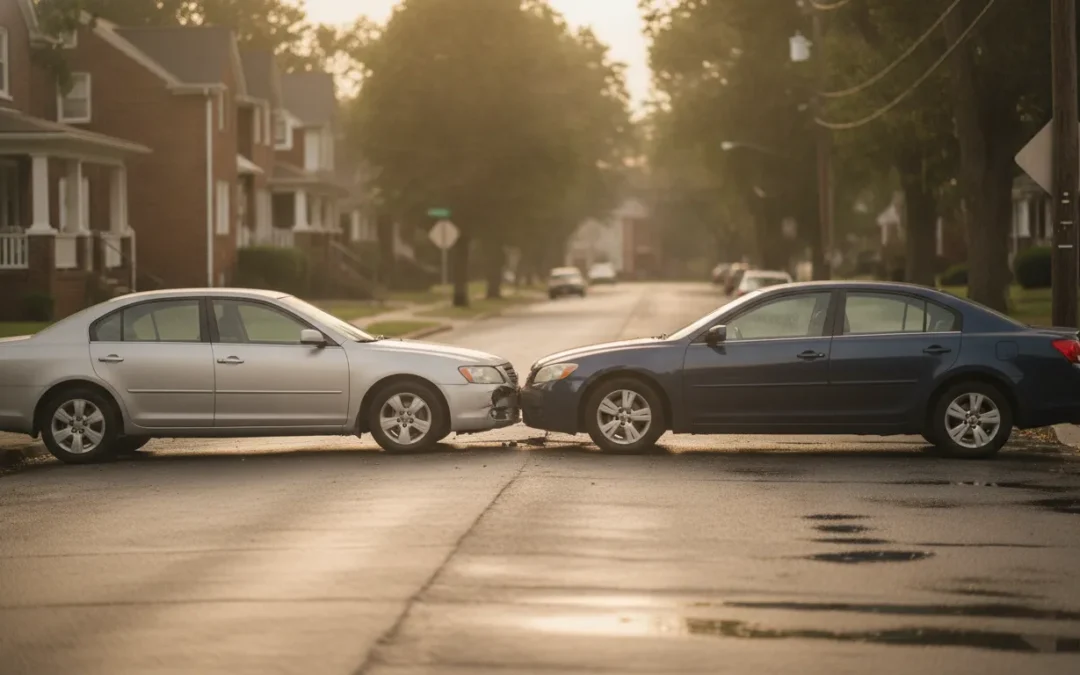
After a Kentucky crash, the question is usually not just who received a ticket. Start with whether the facts connect another driver’s actions to your injuries, and whether there is a practical way to address the losses.
Request a free case evaluation
A car accident case may be worth reviewing when the evidence suggests another person contributed to the crash and you suffered an injury or other real loss. Insurance or another source may also need to be available to address that loss. Photos, witness information, medical records, the crash report, and insurance details can help, even if fault is disputed or shared.
These questions get harder as evidence fades and injuries change. Ask for guidance promptly, especially if you are unsure how Kentucky insurance rules apply or whether your own actions affect the claim. The key facts usually fall into four connected areas, each of which deserves a careful look before you decide what to do next.
Four facts that shape a car accident case
After a Kentucky crash, the useful first step is not trying to predict a payout. It is sorting the situation into a few practical questions. The answers show which facts need a closer look, and which gaps make a claim harder to judge.
| Question | What to look for | Why it matters |
|---|---|---|
| Was someone else careless? | Look at what each driver did before and during the crash, and whether another person’s actions played a part. | Responsibility is not always all-or-nothing. Kentucky can assign percentages of fault when more than one person contributed to the harm. Kentucky’s fault-allocation statute describes that process. |
| Were you hurt or did you lose something real? | Consider physical injuries, treatment needs, damage to property, lost income, or another loss that can be supported with records and other evidence. | A legal claim needs more than an upsetting crash. The harm, and its link to the crash, has to be clear and supported. |
| Is there insurance or another way the loss could be paid? | Name the policies that might apply. Do not assume one policy covers every loss. | Who might pay is a separate question. Kentucky insurance rules can change the review, even when another driver may have been careless. |
| Is there still evidence of what happened? | Look for accounts, records, vehicle damage, and medical notes that connect the crash to the loss. | Evidence helps test different versions of what happened and how bad the harm was. Without solid support, a believable story can still be hard to prove. |
These questions are a screening framework, not a scorecard. Answering yes to all four does not mean a lawyer will accept the matter. That the other side will agree with the facts, or that money will be paid. The crash, the injuries, the coverage, and the proof still need a review of your own facts. This information is for general informational purposes only and is not legal advice. Reading it does not create an attorney-client relationship with Rick Hessig Injury Law.
Was someone else careless?
- Note what the other driver did, such as speed, a phone, or a missed sign.
- Ask whether that choice connects to the crash and the harm.
- Remember that shared fault is a percentage question, not an automatic no.
Drivers are expected to pay attention and follow the road rules. A liability question may begin when another person’s choice appears connected to the crash and the harm that followed. That choice could include speeding, looking at a phone, missing a stop sign, or following too closely.
The key is not simply that another driver made a mistake. The question is whether the conduct contributed to the collision and the injuries or other losses being evaluated. A crash report, photos, witness accounts, vehicle damage, or medical records may help connect those pieces. The details of the crash matter. One fact rarely answers the whole question.
More than one person may have contributed to what happened. Kentucky’s fault-allocation statute, KRS 411.182, provides that when multiple people may share fault, a court or jury assigns each person a percentage of the total fault. The decision considers what each person did and how that conduct relates to the harm. Shared fault does not automatically end the question, but it can affect how responsibility is evaluated.
This is only one screening question. Insurance coverage, the nature of the injuries, and the available proof are separate parts of reviewing what happened. If you are still trying to organize the issue, read more about who may be liable after a Kentucky car crash. That page goes deeper into liability. You can also learn more about how shared fault can affect a Kentucky car accident claim, including why another person’s carelessness is not the only fact considered.
This information is for general informational purposes only and is not legal advice. Reading it does not create an attorney-client relationship with Rick Hessig Injury Law.
Were you hurt, or did you lose something real?
A crash by itself does not answer whether there is a legal matter to evaluate. The more useful question is whether the collision caused a real injury or loss. That may be obvious, such as a broken bone or a trip to the emergency room. It may also be less obvious at first. A sore neck, headache, back pain, or stiffness can become noticeable later, after the immediate stress of the crash wears off.
Other signs of a meaningful loss can include a visit to urgent care. Missed work, damage that leaves your car unsafe or undriveable, or the need for follow-up treatment. You do not need to decide on your own whether a symptom is serious enough to matter. Seek medical attention immediately for your injuries.
A prompt medical visit can create a record of what hurt and when. That record may be useful later when people are trying to understand what the crash caused. Tell the provider about the collision and describe your symptoms accurately. Keep discharge instructions, bills, work notes, prescriptions, and other records connected to your care.
This question is about more than whether a vehicle has a dent. If nobody was hurt and there was no other meaningful loss, the situation may call for an insurance or property-damage conversation rather than an injury claim. If you have pain, needed care, missed work, or cannot use your vehicle, those facts are worth discussing with a Kentucky attorney.
For practical guidance about care and records, read what to do next after car accident injuries in Kentucky. This section is only a first screen: it asks whether there is an actual injury or loss to talk about. Not what the outcome or value of a claim might be.
Is there a way the loss could be paid?
Insurance is one of the practical questions in a car accident case, but it is not the same question as who caused the crash. Start by identifying every policy that might be connected to what happened:
- The other driver’s policy: If another driver may have caused the collision, that driver’s liability coverage may be part of the picture.
- Your own policy: Your insurance may matter even when someone else appears to be at fault. The policy may contain coverage that needs to be reviewed in light of the accident and your injuries.
- The vehicle owner’s policy: The person who owns the vehicle may be different from the person who was driving it. That can make the ownership and insurance details important.
Kentucky also treats some injury benefits and fault-based claims as separate issues. In other words, the insurance question is not answered simply by deciding whether another driver was careless. To understand whether Kentucky is a no-fault state, read the separate explanation rather than assuming that a label tells you what coverage is available in your situation.
What if the other car had little insurance or none that you know of? That does not end the question by itself. It changes where you look. Your own policy, the vehicle owner’s policy, and the facts about who was driving may deserve attention. The policy language and the circumstances of the crash matter, so avoid assuming that the first answer you hear is the complete answer.
It is also important to keep insurance coverage separate from the process of making a claim. If you need an overview of that process, see how an auto insurance claim works after a Kentucky car accident. A review can help identify which policies may be relevant, what information is still missing, and how the insurance question fits with the injury and fault questions.
Keep copies of your policy information, the other vehicle’s information, and any insurance communications. If you were injured, seek medical attention immediately for your injuries. Kentucky timing rules can differ by the kind of claim. Ask soon, instead of waiting to see how the insurance talk goes.
What evidence still exists?
A useful screening question is simple: what do you still have that helps explain what happened? Start with your own memory while the sequence is still clear. Write down the names of people involved, if you know them, and gather photos that were already taken. A crash report, repair notes, medical papers, and messages about the crash may also help connect the collision to your injuries, property damage, and the events that followed.
A police report can be an important source of facts, but it is not a final answer about whether you have a case. It may record what an officer learned at the scene, while other evidence can add context or raise questions about how the crash happened. Kentucky may also allocate fault among people involved, so the review is not always as simple as deciding that one driver was entirely responsible.
The question is not whether you have assembled a perfect file. It is whether the available facts line up well enough to evaluate responsibility, harm, and the insurance issues that may affect the claim. If you need a step-by-step explanation of the broader proof process, read how to prove fault in a car accident. That is different from this initial screening question.
Rick Hessig is a Kentucky attorney and a licensed investigator. A case review can look at whether the facts still fit together and what questions remain. That does not promise that additional proof will be found or that a claim will succeed. Waiting can also make some facts harder to confirm, so consider asking for legal guidance promptly when the crash may have caused an injury or dispute.
What a case review can and cannot tell you
A free case evaluation is a practical conversation about what happened, what injuries followed, what insurance may apply, and what proof is available. It can help identify questions that need attention and show where the facts are strong or still unclear. It is not a promise that Rick Hessig Law will take the matter, that someone else will be found responsible, or that any amount will be paid.
If the answers to those four questions are thin, that is still useful information. You may learn what records to gather, what questions to ask an insurer, or why more information is needed before anyone can assess a car accident case. Shared fault can also affect how a claim is evaluated, so an early conversation should account for more than one person’s actions.
Timing matters, but the right deadline depends on the kind of claim. Kentucky claims can involve different rules and circumstances, so do not guess at a date based on something you read online. Ask about your situation soon, while evidence and memories are easier to collect. The Kentucky car accident guides can help you find related topics and learn more about the questions that may come up.
The fee arrangement is straightforward: No Fee Unless You Win, with no upfront attorney fee. Under Kentucky Bar requirements, case and court costs may be the client’s responsibility. A case review does not guarantee representation or a result, and the details of any fee arrangement should be discussed directly with the attorney.
Car Wreck? Call Rick! The KY Injury Hotline is 502-777-1111. A conversation can help you understand what the available facts do and do not show before you decide what to do next.
This information is for general informational purposes only and is not legal advice. Reading it does not create an attorney-client relationship with Rick Hessig Injury Law.
Frequently Asked Questions
What facts help show whether a Kentucky car accident case may exist?
A useful review usually looks at whether another driver may have acted carelessly, whether that conduct caused harm. What injuries and losses followed, what insurance may be available, and what evidence supports the account. Photos, witness information, medical records, vehicle damage, and the crash report may all help. No single fact guarantees a result.
Does a police report by itself mean I have a case?
No. A police report can preserve important information about the collision, but it is only one part of the review. The report, medical records, witness accounts, photos, and insurance details should be read together. None of them, alone, decides the question.
Can I still have a case if I might share some fault?
Possibly. Kentucky law provides for assigning each at-fault party a percentage of fault when multiple parties may have contributed to an accident or the resulting damages. KRS 411.182 is the Kentucky statute that describes that fault allocation. How shared fault may affect a particular claim depends on the facts, so be accurate about what happened during a case review.
What if I was hurt but the other driver has little or no insurance?
That does not necessarily end the inquiry. The available insurance, your own policy, the injuries, and the other facts of the collision may all matter. Insurance questions are separate from the question of whether another driver was careless. Seek medical attention immediately for your injuries and ask for a prompt review rather than waiting to see whether the problem worsens.
Should I wait until I feel worse before asking for a case review?
No. Getting care soon can help your health and record what happened. Timing can depend on the type of claim, and Kentucky rules may differ by circumstance, so ask about your situation promptly instead of relying on a general deadline. This information is for general informational purposes only and is not legal advice. Reading it does not create an attorney-client relationship with Rick Hessig Injury Law.
Talk through the facts
If a Kentucky crash left you hurt or unsure what the facts add up to, Rick Hessig can look at them with you. The review is free and there is no obligation. Car Wreck? Call Rick! The KY Injury Hotline is 502-777-1111.
Request a free case evaluation
This information is for general informational purposes only and is not legal advice. Reading it does not create an attorney-client relationship with Rick Hessig Injury Law. To see if we may be able to help, please request a free case evaluation.