
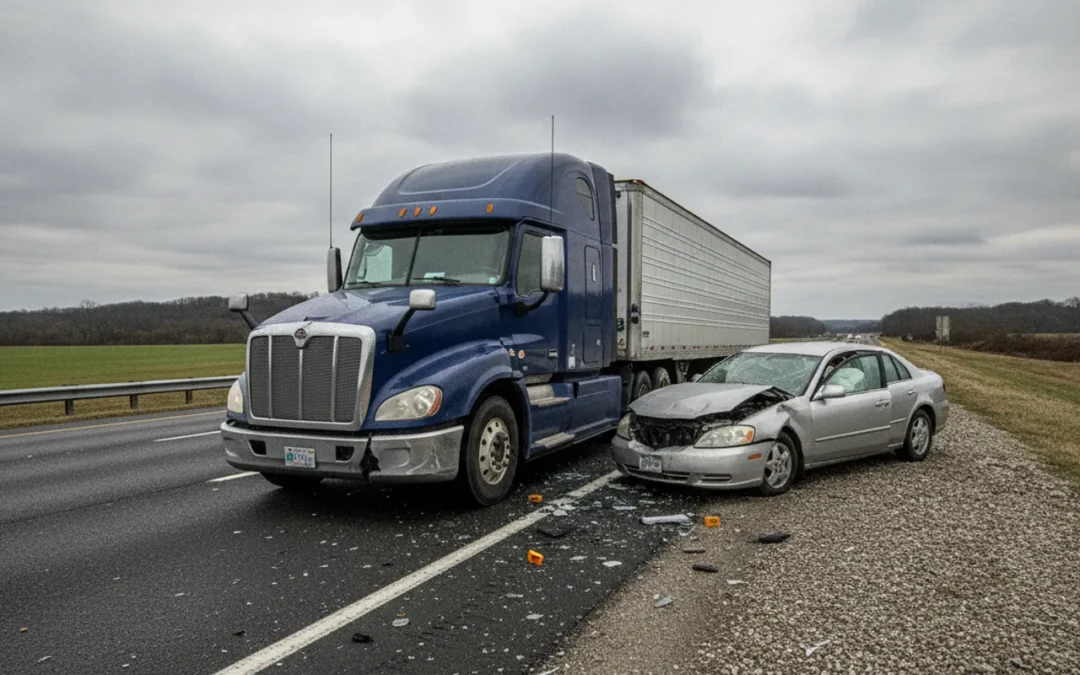
A serious truck collision can leave you dealing with pain, missed work, vehicle damage, and calls from insurance companies all at once. If you are searching for a Henderson truck accident lawyer, start with the steps that protect your health and help keep the facts organized. You do not need to know who is legally responsible before you seek care or ask questions.
Request a free, no-obligation case evaluation or call the KY Injury Hotline at 502-777-1111.
What should you do after a truck crash if you need a Henderson truck accident lawyer?
First, focus on safety and medical care. A crash involving a large truck can cause injuries that are not obvious at the scene. Seek medical attention immediately for your injuries. Follow the care instructions you receive, and tell the provider about every symptom you are experiencing, even if it seems minor at first.
If it is safe to do so, move away from traffic and call 911 when anyone is hurt, vehicles block the roadway, or the situation needs emergency help. Do not put yourself in danger to take photographs or collect information. If you cannot handle these steps yourself, ask a passenger or trusted person to help.
When you are safe, try to preserve basic details:
- Write down the date, approximate time, road or intersection, direction of travel, and weather or visibility conditions.
- Get the truck driver’s name and contact information, and record the company name and identifying information displayed on the truck or trailer if you can do so safely.
- Ask how to obtain the police or crash report, and keep any report number or responding-agency information.
- Get names and contact details for witnesses who are willing to share them.
- Take photographs of the vehicles, visible damage, road conditions, signs, debris, and any visible injuries, but only when it is safe.
Do not argue about fault at the scene or guess about what happened. You can cooperate with responders and exchange required information without deciding who caused the crash. A simple factual account is more useful than speculation.
For a broader checklist of immediate steps, see what to do after a car wreck and this car accident checklist. Truck crashes can involve extra records and several organizations, but the first priorities are still safety, treatment, and accurate documentation.
When may a Henderson truck accident lawyer help with evidence?
A collision with a commercial truck may involve more than the accounts of the two drivers. Depending on the circumstances, potentially useful information could be held by a trucking company, a vehicle owner, an insurer, a repair provider, a shipper, or a government agency. That does not mean every case has all of these parties or records. It means that identifying what exists may take careful follow-up.
The Federal Motor Carrier Safety Administration (FMCSA) is the federal agency responsible for commercial motor vehicle safety. Its official website provides information about federal trucking safety and regulation.
For example, photographs may show vehicle positions and visible damage, while a police report may record initial observations and witness details. Medical records can document the care you received. Work records may help show time missed. In some cases, company or vehicle records may also help clarify the truck’s use, condition, route, or operation. Whether a particular item matters depends on the facts.
Some electronic or business records may not be kept indefinitely. If you believe relevant evidence exists, write down what you know and ask for legal guidance promptly about how to preserve it. Do not try to access a company’s systems, contact a witness in a way that feels unsafe, or remove anything from a crash scene. A lawyer can evaluate what steps may be appropriate for your situation.
What records and photos may help explain what happened?
You do not have to build a legal case on your own. Still, keeping an organized file can make it easier to explain what happened and answer questions. Save originals when possible, and keep a backup of digital items. If you are helping an injured family member, ask before accessing private accounts or sharing their medical information.
| Record or evidence | What it may help document | Practical way to keep it |
|---|---|---|
| Scene and vehicle photos | Vehicle positions, visible damage, road conditions, signs, and debris | Keep original files with date information; make a separate backup. |
| Police or crash report | Responding agency details, involved people, and observations recorded at the scene | Note the report number and agency; request a copy through the appropriate process. |
| Medical records and bills | Symptoms reported, care received, follow-up recommendations, and billed treatment | Save visit summaries, bills, prescriptions, and appointment information together. |
| Work and income records | Time missed, schedule changes, or other effects on work | Keep schedules, pay records, leave notices, and communications with your employer. |
| Insurance communications | What was requested, offered, or discussed and when | Save letters, emails, claim numbers, and notes of calls, including the date and caller. |
| Witness information | How to locate someone who may have seen the collision | Record names and contact details; do not pressure anyone to adopt a version of events. |
Keep a simple event log, too. Record dates of appointments, calls, repair estimates, and any changes in symptoms or daily activities. Be factual: note what you experienced rather than trying to calculate a settlement value. If you do not know an answer, say so rather than filling in a guess.
Photos are useful only when obtained safely and lawfully. Do not return to a dangerous roadway, trespass to photograph a truck or facility, or post private medical details online. If someone else took the pictures, note who took them and when. Avoid editing the only copy; if you need to crop an image for convenience, preserve the original file as well.
A useful file does not have to be complicated. You might make one folder for medical information, one for insurance and crash documents, and one for work and vehicle records. Put dates in filenames when you save digital copies, such as “2026-10-08 clinic visit” or “2026-10-10 insurer letter.” If you keep paper documents, use envelopes or dividers and write the date received on each item. This can help you find the right document during a phone call without relying on memory.
When you write a note about the collision, separate what you personally saw from what someone else told you. For example, “I was traveling east and saw the truck move into my lane” describes your observation; “a witness said the truck had been there for several minutes” identifies another person’s account. Note who provided the information and when. Do not revise an old note to make it sound more certain. If you later remember another detail, add a new dated note.
Also keep a practical record of how the injury affects ordinary tasks, without exaggerating or making a daily exercise of it. A brief note can say that you had trouble carrying groceries, missed a shift, or needed help with a particular errand. If you are unsure whether something belongs in your file, save it and ask a lawyer later rather than discarding a potentially relevant document. Do not share sensitive information publicly just to create a record.
Related information about reporting a car accident and handling an auto insurance claim after a Kentucky crash can help you organize the next steps. These guides are general information, not a substitute for advice about your specific facts.
How should you handle insurance calls after a truck crash?
Notify your own insurer as required by your policy and keep a record of the report. You may also hear from another insurer. Before giving a recorded statement, signing a release, or accepting a payment, make sure you understand what you are being asked to do and whether it could affect your ability to pursue a claim. You can ask for the request in writing and take time to review it.
Be truthful and avoid guessing. You can provide basic facts you know, such as where the crash happened, but do not speculate about speed, distance, or fault if you are unsure. Do not describe an injury as healed if you are still receiving care, and do not minimize symptoms to end a conversation quickly. Keep notes about who called, the insurer’s name, the claim number, and what was requested.
It can help to prepare before a call. Keep a short list of basic details nearby: the date and location, the report number if you have it, and the names of the involved drivers. Write down questions you want answered, such as which documents the adjuster wants, how to send them, and whether there is a deadline stated in a notice or policy. Ask the caller to repeat unfamiliar terms or explain what a form authorizes. You do not have to fill silence with a guess. If you do not know an answer, say that you need to check your records.
After the call, note the date and time, the caller’s name and organization, the phone number if available, and a neutral summary of what was discussed. Keep the notes with any follow-up email or letter. If the request is unclear, ask for it in writing. This creates a practical record of what you were asked to provide without relying on your memory weeks later.
Do not assume that a quick offer reflects the full effect of a crash. At the same time, no article can tell you what a particular claim is worth. The effect of an injury, available coverage, disputed facts, medical information, and other details can differ from one case to another. Before resolving a claim, consider getting advice about the documents and terms you are being asked to accept.
If the insurer says you were partly responsible, do not treat that statement as a final legal decision. The accounts, physical evidence, and other available records may need review. Read more about how shared fault may affect a Kentucky car accident claim. The rules that apply depend on the facts and the governing law, so get case-specific guidance rather than relying on assumptions.
Questions about what to do next? Request a free case evaluation or call the KY Injury Hotline at 502-777-1111.
What practical issues should you track while recovering?
Crash-related tasks can spread across several weeks. A written checklist can prevent small but important details from getting lost while you are managing treatment or helping a family member. You can adapt this simple sequence to your situation:
- Handle urgent health needs first. Keep appointment information and follow-up instructions together. If symptoms change or you have a new concern, contact an appropriate medical provider rather than trying to diagnose it from an online article.
- Make one contact sheet. List the responding agency and report number, insurer and claim numbers, the truck or carrier name shown in the information you have, and any witness contact details. Mark unknowns as unknown; do not fill gaps with guesses.
- Track requests and responses. When an insurer, repair shop, employer, or agency asks for something, note the request date, what was requested, how you responded, and whether you are waiting for anything. Keep copies of what you send.
- Separate necessary expenses and lost-time records. Save receipts and bills related to the crash, plus work schedules or leave records that show time away. This is recordkeeping, not a calculation of what a claim should be worth.
- Review the file periodically. Once a week, check whether new bills, letters, appointment summaries, or repair documents need to be added. If another person is helping, agree on one place to store the documents so there are not several incomplete versions.
For example, if a repair estimate arrives before you receive the crash report, save the estimate and note that the report is still pending. If a provider gives you written follow-up instructions, file them with the visit summary and add the next appointment to your calendar. These modest habits make it easier to answer questions consistently, while leaving legal judgments to a qualified professional.
When may it help to speak with a truck accident lawyer?
You may want to ask a lawyer for guidance if you have an injury, the other driver or insurer disputes what happened, you are being asked to sign a release, or you are unsure which records to preserve. Legal help can also be useful when the crash involves a commercial vehicle and you do not know which people or organizations may hold relevant information.
A lawyer can review the available information, explain possible next steps, communicate with insurers when appropriate, and help identify questions that still need answers. These are possible parts of legal representation, not a promise that a particular claim will be accepted or produce a particular result. Ask who will handle your matter, how you can reach that person, what work may be involved, and how fees and costs are addressed.
Rick Hessig Law is a Kentucky personal-injury firm focused on car-accident victims in Louisville and the surrounding Kentuckiana area. Rick Hessig is an attorney and a Licensed Professional Private Investigator. His investigative background informs case development, but every matter is different and no result can be guaranteed. Henderson is outside the firm’s stated primary service area, so people located there should confirm directly whether the firm can assist with their particular circumstances. Rick Hessig is licensed to practice in Kentucky. Do not assume he can represent you in another state without local counsel.
Rick Hessig Law offers a free, no-obligation case evaluation. The firm describes its fee model as “No Fee Unless You Win,” with no upfront attorney fee. Case and court costs may still be the client’s responsibility. Ask for an explanation of the fee agreement and costs before deciding whether to move forward.
You can read more about truck-crash evidence and claims, review signs it may be time to speak with a car accident attorney, or learn how no-win, no-fee claims work in Kentucky.
Talk with Rick Hessig Law about a free case evaluation or call the KY Injury Hotline at 502-777-1111.
Frequently asked questions
Should I get medical care even if I feel okay after a truck crash?
Yes, do not rely on how you feel at the scene to decide that you need no care. Seek medical attention immediately for your injuries. Tell the provider about your symptoms and follow the guidance you receive.
What if I did not take photos at the scene?
You can still write down what you remember, save the crash report and insurance messages, and keep medical and work records. Do not put yourself in danger to recreate photographs. If other people took pictures or video, note their names and ask how to preserve a copy.
Do I need to know who owned the truck before asking a lawyer for help?
No. Share the identifying details you have, such as the company name or information on the truck, along with the crash report number if available. A legal review may help identify what additional information is needed, but not every crash involves the same parties or records.
Can Rick Hessig Law take a case arising in Henderson?
The firm focuses on Louisville and the Kentuckiana area, and its attorney is licensed in Kentucky. Henderson is outside the stated primary service area. Contact the firm directly to ask whether it can evaluate your circumstances; a free evaluation does not guarantee representation or a particular outcome.
Take the next step at your own pace
After a truck collision, prioritize your health, keep the records you already have, and avoid signing or agreeing to something you do not understand. If you want to discuss your situation, request a free, no-obligation case evaluation and ask any questions you have about the process. This information is general and is not legal advice. In accordance with KBA regulations, we must inform you that case and court costs may be the responsibility of the client.