
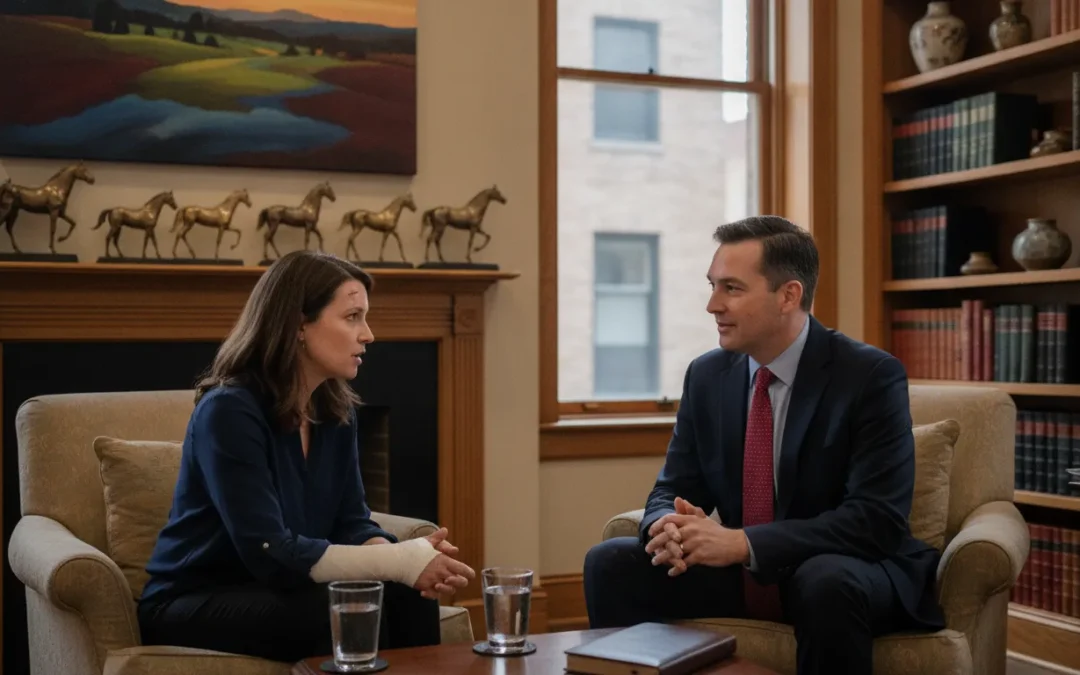
After a crash, the hardest question is often not what happened, but what to do next. You may face pain, conflicting accounts, a damaged vehicle, missed work, or an insurance request before you know how serious the situation will become.
Ready to get started? Call Rick Hessig Law today at 502-777-1111 or request a free case evaluation.
Contacting a louisville personal injury lawyer can be especially useful when fault is disputed, injuries are serious or developing, or an insurer is asking for information. You do not need every detail ready before reaching out. A case-specific conversation can help you understand which facts and records matter.
Start with safety and medical care, then preserve what you can about the collision. The right time to seek guidance depends on the circumstances. You do not need a perfectly organized file or an estimate of what your claim may be worth.
When should you call a Louisville personal injury lawyer after a crash?
You do not need to call a lawyer after every minor crash. If no one is hurt, the vehicles are safely moved, the facts are clear. And the insurance process is straightforward, you may be able to handle the next steps on your own. But you should consider calling a louisville personal injury lawyer when the situation is harder to understand or the consequences are more serious.
A useful rule is to reach out when you are unsure what to do next, not only after a dispute has become a lawsuit. You may want case-specific guidance if the other driver denies responsibility, both drivers give different accounts, or someone is suggesting that you caused the collision. Kentucky’s fault-allocation law considers each party’s conduct and the causal connection between that conduct and the claimed damages. In other words, the facts surrounding the crash and the injuries matter. A conversation can help you understand what information may be important before your recollection, records, or account of events become harder to organize.
Serious injuries are another reason to call promptly. This includes injuries that require emergency care, hospitalization, surgery, extensive treatment, or time away from work. It also includes symptoms that are not obvious at the scene. The CDC explains that some concussion or mild traumatic brain injury symptoms may appear hours or days after an injury. Seek medical attention immediately for your injuries. A legal consultation should never replace medical care. It can help you think through documentation and communications while you focus on getting better.
You may also want advice if an insurer is asking detailed questions, requesting a recorded statement, or pressing you to discuss fault before you understand the full situation. That does not mean every insurance request is improper. It does mean you should take care with statements about how the crash happened, what hurts, and what treatment you may need. You can read more about handling a Kentucky accident insurance claim before deciding what support would be useful.
Finally, uncertainty by itself is a valid reason to ask questions. You do not need every detail ready before reaching out. Rick Hessig Law’s case evaluation page says useful information may include the crash date and location. People involved, insurance details, a police report, medical treatment information, photographs, and other records. The firm serves Louisville and the wider Kentuckiana area, including Southern Indiana, and describes its approach as personal attorney involvement supported by investigator-backed fact development. A free, no-obligation evaluation can help you decide what to do next without promising that every case requires representation.
Start with safety, medical care, and a clear record
The first priority after a crash is safety, not proving who caused it. If you can do so safely, move out of active traffic, turn on your hazard lights, and check whether anyone needs urgent help. Kentucky law requires a driver involved in a crash causing injury or death to stop and ascertain the extent of the injury or damage. It also requires reasonable assistance, including arranging transportation for medical treatment when treatment appears necessary or an injured person requests it. Read the Kentucky statute for the full language.
Seek medical attention immediately for your injuries. Do not assume that feeling shaken, sore, or mostly normal means you are uninjured. Some mild traumatic brain injury and concussion symptoms may appear right away, while others may not appear for hours or days, according to the Centers for Disease Control and Prevention. A healthcare professional can evaluate your condition and explain appropriate next steps. This article does not diagnose injuries, and you should follow medical guidance for your situation.
If you have danger signs after a head impact or other trauma, seek emergency care. The CDC advises immediate emergency medical care for danger signs of a possible mild traumatic brain injury or concussion. Examples include a headache that gets worse and does not go away or repeated vomiting. Call 911 or go to an emergency department when the situation calls for it. Do not drive yourself if you are too impaired to travel safely.
Report the crash to the appropriate law enforcement agency when required and provide an accurate account. Kentucky law requires immediate notice to a law enforcement officer when a crash results in fatal or nonfatal personal injury. A police report can preserve basic information about the location, people involved, vehicles, and apparent circumstances. Do not guess about facts you do not remember. Explain what you know, and make clear when you are unsure.
Preserve a simple record while details are fresh. Save photographs of vehicle damage, the roadway, traffic controls, visible injuries, and surrounding conditions if it is safe to take them. Keep contact information for witnesses, copies of medical records and discharge instructions, prescription information, and notes about symptoms or missed work. Do not alter photographs or delete messages related to the crash. You do not need to organize everything perfectly before asking for help. For more practical guidance, review what to do after crash injuries.
A clear timeline can help you explain what happened later: when the crash occurred, when symptoms began, where you received care, and what treatment providers told you. Keep the record factual rather than speculating about fault or predicting how serious the injury will be. If questions about the crash, medical care, or documentation become difficult to manage, a Louisville injury attorney can review the available information. The attorney can explain possible next steps without requiring you to have every detail ready.
Disputed fault is a reason to get case-specific guidance
After a collision, the people involved may remember the same few seconds differently. One driver may say the light was green. Another may believe the other vehicle turned across the lane or failed to yield. A witness may have noticed the impact but not the traffic signal. Those disagreements do not automatically establish who is responsible, but they are a reason to preserve the available information and consider case-specific guidance.
In Kentucky, fault may be allocated among the parties in a covered multi-party tort action. The statute directs the factfinder to determine the damages without contributory fault and then assign each party a percentage of fault. It also says the decision-maker should consider the nature of each party’s conduct and the causal connection between that conduct and the claimed damages. See Kentucky’s fault-allocation statute. In practical terms, that means the details of the crash and the evidence connecting conduct to injury can matter.
| Situation after a crash. | Why a conversation may help. | Useful starting information. |
|---|---|---|
| Fault is disputed. | Accounts and evidence may need careful review. | Photos, witness details, video, and the police report. |
| Injuries are serious or changing. | Medical care and treatment records may become important. | Symptoms, provider instructions, and treatment information. |
| An insurer is asking questions. | You may want to understand what is being requested. | Letters, claim details, and notes about communications. |
Small details can change the picture.
Start by preserving what you have, without editing or deleting anything. Photos may show vehicle positions, lane markings, traffic signs, weather, visibility, or damage patterns. Video from a nearby business, a vehicle camera, or a phone may help establish what happened, but recordings can be overwritten or lost. Witness names and contact information may also become harder to locate as time passes.
Damage evidence should be viewed alongside the other facts, not treated as a complete answer by itself. The location and severity of damage may help explain the mechanics of an impact, while medical records can document the injuries reported and treatment received. A police report may provide another account of the scene. But it is still important to discuss the full circumstances rather than assume one document resolves every disputed point.
Right-of-way questions deserve the same caution. An intersection, lane change, turn, or merge may involve several facts that are not visible from a brief description. Avoid declaring fault based only on a general rule or an online hypothetical. If the accounts conflict, a closer look at evidence when fault is disputed may help you understand which questions need attention.
You do not need to solve the fault dispute before asking for guidance. A Louisville personal injury lawyer can review the information you have, identify gaps, and explain what additional facts may be useful. That discussion does not promise representation or a particular result. It gives you a clearer way to evaluate your next step while the available evidence is still identifiable.
Serious or delayed injuries deserve attention
Some crash injuries are obvious at the scene. Others become harder to ignore after you get home, try to sleep, or return to ordinary activities. A person may initially feel shaken rather than seriously hurt, then notice pain, confusion, dizziness, or other changes later. Delayed symptoms do not prove a particular diagnosis. They are a reason to take your health seriously and seek appropriate medical guidance.
The CDC explains that some mild traumatic brain injury and concussion symptoms may appear right away, while others may not appear for hours or days after the injury. Symptoms differ from person to person and can affect how someone feels, thinks, acts, or sleeps. Possible signs include headaches, dizziness or balance problems, nausea or vomiting, vision problems, difficulty concentrating, memory problems, trouble thinking clearly, anxiety, irritability, and changes in sleep. These symptoms should not be dismissed simply because they were not present immediately after the collision. The CDC’s overview of concussion signs and symptoms provides additional information.
Seek medical attention immediately for your injuries.
Emergency care is especially important if you have danger signs. The CDC advises seeking immediate emergency medical care for danger signs of mild traumatic brain injury or concussion. Examples include a headache that gets worse and does not go away, repeated vomiting, loss of consciousness, extreme drowsiness, or being difficult to wake. Do not wait for a legal consultation before addressing an urgent medical concern.
After you receive care, keep track of what changed, when symptoms began, and how they affect work, driving, sleep, or daily tasks. Follow your medical providers’ instructions and be candid about the collision and your symptoms. Those records may also help a Louisville driver understand what to do after crash injuries, including how to organize information for a case-specific conversation with a lawyer.
A Louisville personal injury lawyer cannot diagnose an injury or replace a medical professional. A legal evaluation can, however, help you understand what information may matter. How the crash and treatment history fit together, and what questions to raise as you consider your next step. If symptoms are serious or worsening, put medical care first.
What to do when an insurer asks for information
After a crash, an insurance representative may ask questions about what happened, your injuries, treatment, or the damage to the vehicles. It is reasonable to slow down and understand what is being requested before you answer. You do not have to rely on memory alone while you are still dealing with pain, stress, or confusion.
Start by preserving the information you already have. Keep emails, letters, text messages, claim numbers, photographs, repair estimates, medical records, discharge instructions, and notes about calls in one place. Write down when the crash happened, where it occurred, who was involved, and what you remember while those details are still fresh. The firm’s evaluation guidance also identifies the police report, medical treatment information, photographs. And other records as useful materials, but says you do not need every detail ready before reaching out.
Understand the question before answering
Insurance questions can cover several different subjects. A request may concern the timing and location of the crash, the vehicles and people involved, your symptoms, medical care, or your understanding of fault. Read written requests carefully. If a question is unclear, ask what information is needed and whether there is a deadline for responding. Do not guess at an answer simply because you feel pressured to respond quickly.
Be accurate and truthful. If you do not remember something, say that you do not remember. If your symptoms have changed or new treatment has been recommended, keep your medical providers informed and keep those records. Seek medical attention immediately for your injuries. Medical decisions should be guided by a qualified health professional, not by a conversation about an insurance claim.
Get advice before consequential statements
Before giving a recorded statement, signing a release, discussing the full scope of your injuries, or agreeing to a settlement-related document, consider getting case-specific legal advice. A Louisville personal injury lawyer can help you understand what information may matter and how the request fits your circumstances. That does not mean every insurance request is improper. It means you should understand the consequences before making a statement that may be difficult to clarify later.
For more background, review this guide to handling a Kentucky accident insurance claim. If you want to discuss the crash, Rick Hessig Law offers a free, no-obligation case evaluation. The firm’s evaluation topics can include the crash, injuries and treatment, the police report, fault, and insurer communications. Case and court costs may be the client’s responsibility, so ask questions about the fee arrangement before moving forward.
What a Louisville case evaluation can help you understand
After a crash, it can be difficult to know which details matter and what questions to ask. A case evaluation gives you an opportunity to discuss the timing and location of the collision. Your injuries and treatment, what happened before impact, the police report, and communications with an insurer. You do not need to have every detail ready before reaching out. The information you have can provide a starting point for a more focused conversation.
A local evaluation may also help you identify the next questions that deserve attention. For example, you may want to understand how the available evidence relates to fault. Whether the medical record reflects the problems you are experiencing, or how to respond when an insurance representative requests information. The goal is not to promise a result or decide the value of a claim from a brief conversation. It is to help you understand the issues that may affect your situation and what information may be important to preserve.
Rick Hessig Law focuses on people injured in Louisville, Jefferson County, and the wider Kentuckiana area, including Southern Indiana communities such as Jeffersonville, Clarksville, and New Albany. The firm’s stated approach includes direct attorney involvement and investigator-backed case development. Rick Hessig is directly involved, while investigators help develop the facts needed to understand what happened. That local, personal approach is a description of how the firm works, not a guarantee that every case will be accepted or produce a particular outcome.
The evaluation page invites you to request a free case evaluation with no obligation to proceed. If you are considering the firm’s fee arrangement, the approved explanation is No Fee Unless You Win. There is no upfront attorney fee, but case and court costs may be the client’s responsibility. Ask questions about those terms so you understand them before making a decision.
Whether you call after receiving an insurer’s request or simply feel unsure about what comes next, bring your questions as they are. A conversation with a Louisville personal injury lawyer can help you organize the facts and identify a sensible next step without requiring you to make promises about your case.
How to prepare before you call
You do not need a perfect file or a complete timeline before asking for help. If you are hurt, confused about fault, or concerned about an insurance conversation, contact a Louisville personal injury lawyer when you need guidance. Do not delay urgent medical care or a time-sensitive legal question just to gather every item below.
If you have a few minutes and feel well enough, these steps can make the initial conversation clearer:
- Write down the basic crash details. Note when and where the collision happened, the vehicles involved, and what you remember about how it occurred. Include the names and contact information you have for the other driver, witnesses, and responding officers. If you do not know something, say that plainly rather than guessing.
- Describe your injuries and treatment so far. List the symptoms you noticed, when they began, and where you received medical care. Include follow-up appointments, prescribed treatment, and how the injuries are affecting work or ordinary activities. Seek medical attention immediately for your injuries. For more immediate guidance, review what to do after crash injuries.
- Preserve what you already have. Gather photographs, videos, vehicle-damage information, medical records or bills in your possession, wage information, and copies of messages about the crash. Do not alter photographs or delete messages because they seem unimportant. If evidence is difficult to obtain, mention that during the call instead of trying to recreate it.
- Organize insurance communications. Save letters, emails, text messages, claim numbers, and notes about calls with an insurer. Write down who contacted you and what was requested. You can learn more about handling a Kentucky accident insurance claim before responding to additional questions.
- Prepare your questions and concerns. Tell the attorney what you are most worried about, whether fault is being disputed. And whether you have questions about medical care, bills, lost work, or the next insurance step. You can request a free case evaluation without an obligation to move forward. The goal of the call is to discuss your circumstances and understand possible next steps, not to promise a particular result.
Even if you have none of these materials ready, you can still explain what happened and ask what to do next. A clear account of the situation is a useful place to begin.
Frequently Asked Questions
What should I avoid saying after a crash?
Do not guess about fault, minimize your injuries, or give an insurer a recorded statement before you understand what is being asked. Stick to accurate facts about what happened, your symptoms, and your treatment. If you are unsure how to respond, ask for time to get case-specific guidance.
Can I seek compensation for pain and suffering in Kentucky?
Pain, discomfort, emotional strain, and the effect of an injury on daily life may be relevant in an injury claim. The significance of those effects depends on the facts, medical records, treatment, and other evidence in the individual case. A case evaluation can help you understand which information may matter.
What is the hardest injury to prove after a collision?
Injuries without obvious outward signs, including some soft-tissue injuries and concussion symptoms, can be difficult to document because symptoms may change or appear later. That does not make them unimportant. Prompt medical attention, consistent treatment, and clear records can help show what you experienced.
Should I call a lawyer if the other driver disputes fault?
Yes, disputed fault is a practical reason to seek an individual evaluation, especially when the accounts differ or the available evidence is incomplete. Bring what you know about the crash, injuries, police report, witnesses, photographs, and insurer communications. You do not need to resolve fault before asking for guidance.
Ready to take the next step?
After a Louisville-area crash, a timely conversation can help you understand which details may matter. Especially if fault is disputed, injuries are serious, or an insurer is asking questions. You can request a free, no-obligation case evaluation to discuss what happened with Rick Hessig Law. You can also call the KY Injury Hotline at 502-777-1111 if speaking by phone is easier. No outcome is promised, but getting case-specific guidance can help you decide what to do next.