
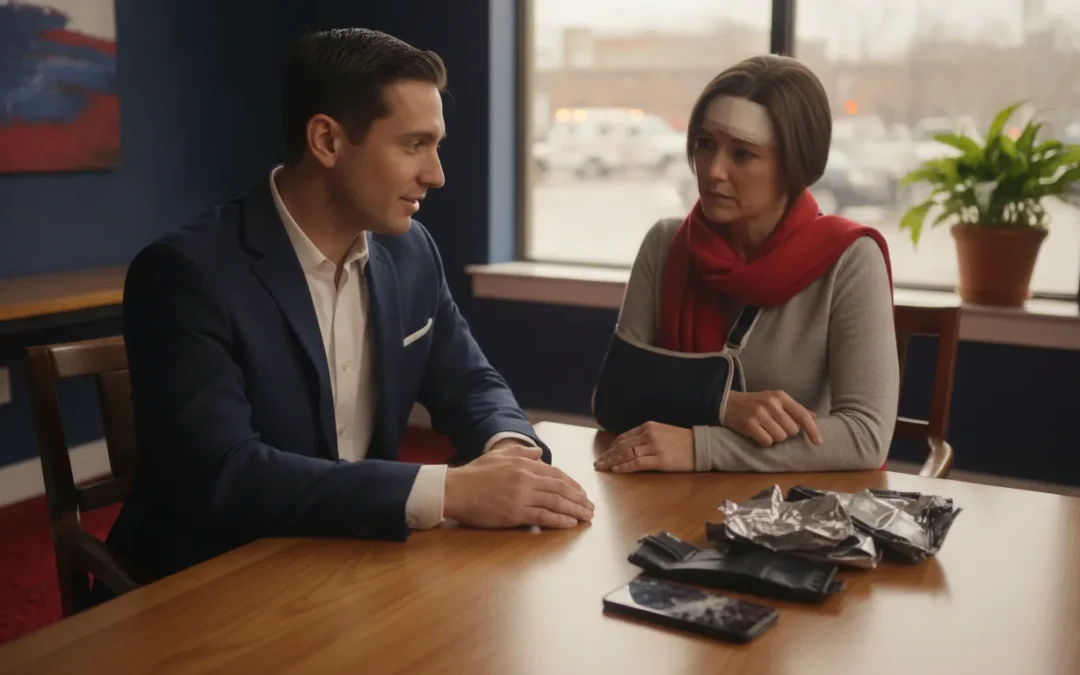
A suspected impaired-driving crash can leave you dealing with injuries, damaged property, insurance calls, and uncertainty about what happens next. Put safety first, call 911, avoid confronting the other driver, and preserve what you can without putting yourself in danger.
Get your free case evaluation here.
A Kentuckiana car accident lawyer for drunk driving can help review the available evidence. The lawyer can separate the driver’s potential criminal case from your possible civil insurance claim. The lawyer can also explain practical next steps. A suspicion or charge does not prove every part of your claim.
Photos, witness details, medical records, vehicle damage, and insurer communications may become important later. Seek medical attention immediately for your injuries. The first decisions at the crash scene can protect your health and help preserve useful information, so begin with the steps that keep you and others safe.
What should you do immediately after a suspected drunk-driving crash?
After a serious collision, you may feel confused, frightened, or unsure what to do next. Focus first on safety and medical care. You do not need to decide at the scene whether another driver was legally impaired. Avoid confrontation, record what you can safely observe, and let emergency personnel handle the immediate investigation.
- Get to a safe position if you can. If your vehicle can move and doing so will not worsen an injury, move it away from active traffic. Turn on your hazard lights and stay in a protected area. Do not approach, argue with, or attempt to restrain a driver you suspect may be impaired. If you cannot move safely, remain buckled in when possible and wait for emergency responders.
- Call 911 and report the crash. Tell the dispatcher where the collision occurred, whether anyone appears injured, and whether traffic remains dangerous. Describe your observations without making a conclusion about intoxication. For example, you can report that a vehicle crossed a lane, smelled of alcohol, or that a driver was having trouble standing if you personally observed those facts. Ask that medical and law-enforcement personnel come to the scene.
- Accept medical care and follow up promptly. Tell responders about pain, dizziness, confusion, bleeding, or any other symptom, even if it seems minor. Seek medical attention immediately for your injuries. Some crash injuries are not obvious at first, and a medical record can also document what you reported after the collision. Follow the treatment instructions you receive and keep discharge paperwork, prescriptions, bills, and appointment information.
- Record factual observations when it is safe. Note the time, location, weather, road conditions, direction of travel, and what you saw before impact. Write down statements made by the other driver or witnesses as accurately as you can. Do not guess about speed, alcohol use, or fault. Give officers your account and request information about the crash report before leaving if they provide it.
- Take photographs and identify witnesses without creating another risk. If you can do so safely, photograph vehicle positions, visible damage, roadway conditions, traffic signals, and nearby property or cameras. Do not step into traffic or move evidence to get a better picture. Ask witnesses for their names and contact information. Never photograph or record instead of getting needed medical help.
- Keep every crash-related record. Save photos, videos, medical documents, repair estimates, towing information, insurance messages, and notes about missed work or daily limitations. Avoid posting details about the crash on social media. For additional practical guidance, review what to do after a crash.
These steps help protect your health and preserve information while the facts are still available. If you are able, notify your insurer as required by your policy, but avoid guessing about injuries or agreeing to a settlement before you understand the claim.
What may a Kentuckiana car accident lawyer investigate?
After a suspected impaired-driving crash, the available evidence can change quickly. A careful investigation may begin with the scene itself: vehicle positions, skid marks, debris, lighting. Road conditions, traffic controls, visible damage, and photographs taken before vehicles or property are moved. These details may help explain what happened, but they do not by themselves establish that a driver was intoxicated or legally responsible.
A lawyer may also review the crash report and related law-enforcement records when they are available. Those materials can include officer observations, statements from the people involved, citations, arrest information, diagrams, and references to field sobriety testing. The criminal investigation and any injury claim are separate processes. A charge, arrest, or conviction should not be treated as automatic proof of every issue in a civil claim.
Records, witnesses, and video
Witnesses can provide information that is not captured in a report. Investigators may identify passengers, other drivers, pedestrians, nearby residents, first responders, or employees who saw the vehicles before or after the collision. Their contact details and specific observations may matter more than a general impression that someone appeared impaired.
Available video may also be important. Depending on the location, sources might include traffic cameras, nearby businesses, home security systems, dash cameras, or cellphone footage. Video is often retained for a limited time, so a prompt request may be useful. You can learn more about preserving crash evidence without altering or deleting the original files.
Medical, vehicle, and toxicology evidence
Medical records help document the injuries reported after the crash, the treatment provided, and the patient’s ongoing symptoms. A lawyer may compare those records with the collision mechanics, available photographs, and later medical bills or work limitations. Seek medical attention immediately for your injuries. Do not delay care while trying to gather evidence.
Depending on the vehicles and the circumstances, an investigation may also consider event-data information, vehicle damage, maintenance records, airbag deployment, or other vehicle evidence. These sources may help address speed, braking, restraint use, or the force and direction of impact. Their availability and reliability vary, and they should be interpreted with the surrounding facts.
When law enforcement collected a breath, blood, or other test, the related BAC or toxicology evidence may be reviewed if it is legally available. Timing, collection methods, chain of custody, and the distinction between alcohol and other substances can matter. A lawyer should not assume that a test result alone answers every question about the collision.
Insurance and coverage records
Finally, the investigation may include insurance policies, claim communications, vehicle ownership, and records showing how the crash affected your treatment, work, and daily life. Keep photographs, witness information, medical records, bills, insurer messages, and crash documents in their original form. For more on documenting evidence of driver fault, focus on specific facts rather than assumptions.
Rick Hessig Law combines legal representation with investigator-backed case development for people injured in Louisville, Jefferson County, and Southern Indiana. That approach is intended to examine the available evidence carefully, not to promise a particular claim result.
How are criminal and civil cases different after an impaired-driving crash?
After a suspected impaired-driving crash, two separate legal tracks may develop. The criminal case is brought by the government against the driver. A civil injury claim is pursued by an injured person or family against responsible parties and their insurance coverage. The tracks can involve some of the same evidence, but they serve different purposes and do not produce the same decisions.
| Criminal case | Civil injury claim |
|---|---|
| The government decides whether to investigate, file charges, and prosecute the driver. | The injured person or family evaluates a claim for bodily injury, losses, and related legal rights. |
| The focus may include whether the driver violated a criminal impaired-driving law. | The focus may include how the crash happened, what injuries resulted, available insurance, and who may be legally responsible. |
| Possible outcomes are controlled by the criminal court and prosecution process. | The claim may be discussed with insurers, resolved through an agreement, or proceed as a Kentucky car accident lawsuit when appropriate. |
A charge or test result is not the whole civil case
An arrest, criminal charge, breath or blood test, or conviction can be important information. It does not automatically prove every issue in a civil claim, and it does not guarantee compensation. A civil evaluation still considers the available crash evidence, medical records, injury documentation, insurance information, and other facts specific to the collision. Likewise, the absence of an arrest or conviction does not by itself answer every civil question.
That is why it is important to preserve records without trying to confront the other driver or investigate in an unsafe way. Keep photographs, videos, witness details, vehicle-damage information, medical records, bills, insurer communications, and other crash-related documents. Seek medical attention immediately for your injuries.
How the processes may overlap
Police work and a civil investigation can occur at the same time. A report, witness account, or test result may be reviewed as part of understanding the crash, but each process has its own rules and decision-makers. Do not assume that a criminal case will preserve every item needed for an injury claim. Or that you must wait for the criminal process to end before asking questions about your own claim.
A Kentuckiana car accident lawyer for drunk driving cases can help separate what is known from what still needs to be confirmed in a Kentucky or Southern Indiana crash. Case-specific guidance should account for the location, available evidence, injuries, and insurance issues.
How do insurance claims work after a suspected impaired-driving crash?
Insurance claims after a suspected impaired-driving crash still require careful documentation and steady communication. A police investigation may address whether the other driver violated criminal law. While an insurance claim focuses on the injuries, property damage, available coverage, and facts connected to your losses. One process does not automatically decide the other.
Start by reporting the crash as required by your policy and by following any instructions from law enforcement. Give a truthful account of what you observed. If you believe the other driver showed signs of impairment, describe specific observations rather than stating a conclusion. For example, note unusual driving, statements you heard, or what happened at the scene. Do not confront the other driver or try to investigate impairment yourself.
Keep a complete claim file
Save the crash report, photographs, videos, witness information, vehicle-damage estimates, medical records, bills, work-related records, and every message or letter from an insurer. Keep a simple timeline of medical appointments, symptoms, treatment instructions, and missed work. These records can help a lawyer understand the claim and identify information that may need to be requested from an insurer or another source.
You can learn more about how to handle the insurance claim after a Kentucky crash. If an adjuster asks for a recorded statement, broad medical authorization, or a release, ask what the document covers and why it is being requested. Be accurate, but avoid guessing about your recovery, the full extent of your injuries, or facts you do not remember. Do not sign a settlement or release before you understand what rights it may affect.
Review coverage before resolving the claim
Coverage can involve more than the other driver’s policy. The available policies, policy limits, your own coverage, and the relationship between property damage and bodily-injury claims may all matter. A case-specific review can help you understand what information is missing and whether resolving one part of the claim could affect another. No one can promise that an insurer will pay a particular amount or that a claim will succeed.
A lawyer who helps with insurance companies can review communications, organize supporting records, and discuss possible next steps. Rick Hessig Law offers free case evaluations and markets its contingency arrangement as No Fee Unless You Win, with no upfront attorney fee. In accordance with KBA regulations, case and court costs may be the responsibility of the client. Ask for the specific terms that would apply to your situation before deciding how to proceed.
What losses and injuries should families document?
After a suspected impaired-driving crash in Louisville, Jefferson County, or Southern Indiana, families often have to manage medical care, transportation, work, and insurance questions at the same time. A simple, organized record can help preserve what happened and how the collision affected daily life. Document what you know and experience without trying to diagnose an injury or decide the legal value of a claim.
Track symptoms and medical care
Write down symptoms as they appear and change. Include pain, stiffness, headaches, dizziness, sleep problems, emotional distress, or limits on movement when those are part of your experience. Note the date, what you were doing, and whether the symptom affected ordinary activities. Keep copies of medical records, discharge instructions, prescriptions, referrals, therapy records, bills, and receipts for crash-related care. Share complete information with your medical providers and follow their instructions.
If symptoms develop after you leave the scene, do not assume they are too minor to mention. Seek medical attention immediately for your injuries. Medical records can also help show the timing between the collision, the symptoms, and the treatment, but only a qualified professional can evaluate your condition.
Record work and household limitations
Keep a timeline of missed work, reduced hours, changes in duties, and restrictions provided by a medical professional. Save pay records, employer communications, and work-status notes when available. Avoid estimating a financial loss from memory. Let the records show what changed and when.
Also note household tasks that became difficult, such as driving, shopping, caring for children, cooking, cleaning, or maintaining a home. Record who helped, what help was needed, and for how long. This does not mean every difficulty becomes a recoverable loss. It gives a clearer account for discussion with an attorney and the insurance company.
Preserve property and fatal-crash records
Photograph vehicle damage and keep repair estimates, towing or storage documents, and information about personal property damaged in the collision. Do not discard damaged items before asking whether they should be preserved. Keep crash reports, claim numbers, insurer messages, letters, and notes from conversations in one secure folder.
When a crash kills a family member, preserve records carefully and give the family time to grieve. Gather available medical and funeral documents, employment or household records, insurance communications, and information about the person’s role in the family. Do not assume that a criminal charge proves every civil issue or guarantees a result. Families in the Kentuckiana region can discuss the available records and next steps during a case evaluation with a local injury attorney.
When should you speak with a Kentuckiana car accident lawyer for drunk driving?
You do not have to wait for the criminal case to end before asking questions about your own injuries, insurance claim, or potential civil case. A conversation may be useful when the crash caused injuries, treatment is ongoing. The other driver was suspected of impairment, an insurer is asking for a statement, or important facts are disputed. It can also help when you are caring for an injured family member and are unsure what records or evidence to preserve.
A suspected DUI charge does not automatically establish every part of a civil claim, and no single document can predict how a case will proceed. A case-specific review can help separate what is known from what still needs to be investigated. It can also clarify the difference between the criminal process involving the driver and a potential civil insurance claim involving the injured person.
What to bring to an initial conversation
Bring whatever you already have. Do not delay a conversation because a police report, medical bill, or insurance file is incomplete. Useful information may include:
- The date, time, and location of the crash, along with the names and contact information for known drivers and witnesses.
- Photos or videos of the scene, vehicles, road conditions, visible injuries, and property damage.
- Police, ambulance, emergency-room, and follow-up medical records, if available.
- Health insurance or auto insurance information, claim numbers, adjuster messages, recorded-statement requests, and settlement documents.
- A short timeline of symptoms, treatment, missed work, and how the injuries have affected daily responsibilities.
Keep original files and messages. Do not edit photos, delete posts, repair or dispose of a damaged vehicle without considering how that may affect evidence, or confront a driver about suspected intoxication. If you need medical care, seek medical attention immediately for your injuries.
Why local, direct attention matters
Rick Hessig Law focuses on people injured in crashes across Louisville, Jefferson County, and Southern Indiana. Rick Hessig is a Kentucky-licensed attorney and Licensed Professional Private Investigator. That combination supports a direct attorney-led, investigator-backed approach to developing the facts, reviewing available evidence, and understanding the local setting. It does not mean that every case requires the same investigative step or will have a particular result.
In a first conversation, ask who will evaluate the evidence, how communication will work. What information should be preserved, and whether the firm can address the Kentucky side of the matter. If a crash involves another jurisdiction, ask what local-counsel issues may need to be considered. You can also prepare for a legal consultation by writing down your questions before the call.
Rick Hessig Law offers free case evaluations. The firm’s fee message is “No Fee Unless You Win,” with no upfront attorney fee. But case and court costs may be the client’s responsibility under Kentucky Bar regulations. A conversation is an opportunity to understand your options, not a promise that the firm will accept the case or that any particular outcome will occur.
Frequently Asked Questions
Is it worth pursuing a civil claim after a suspected drunk-driving crash?
It may be, especially when the crash caused injuries, lost income, property damage, or other documented losses. A criminal case against the other driver and your potential civil insurance claim are separate matters. You do not need to wait for a conviction to discuss your options, and a charge or conviction does not guarantee a civil recovery.
How much money does a drunk-driving crash lawsuit pay?
There is no reliable amount to promise before reviewing the facts. The available insurance coverage, your injuries, medical care, work limitations, property damage, and supporting records may all matter. A case evaluation can help identify what should be documented and whether a claim may be appropriate, but no attorney can guarantee a result or recovery.
How long does it take to pursue a claim after the crash?
The timeline depends on the investigation, medical treatment, insurance communications, available evidence, and whether a lawsuit becomes necessary. Preserve photos, videos, witness information, medical records, bills, insurer messages, and crash-related documents as soon as you can. Ask for case-specific guidance rather than relying on a general deadline, particularly when Kentucky and Southern Indiana issues may differ.
What evidence can help show that another driver was impaired?
Useful evidence may include police records, witness observations, nearby video, vehicle damage, medical records, and available breath or blood testing. Describe what you personally observed without confronting or accusing the other driver. Do not alter, discard, or repair important evidence before it can be documented and reviewed.
What should I do first after a suspected impaired-driving crash?
Move to safety if you can, call 911, and cooperate with emergency personnel. Seek medical attention immediately for your injuries. Avoid confrontation with the other driver, take safe photos when possible, and record witness details. Then consider a prompt conversation with a local attorney about preserving evidence and communicating with insurers.
This information is for general informational purposes only and is not legal advice. Reading or listening to these answers does not create an attorney-client relationship with Rick Hessig Injury Law. To see if we may be able to help, please request a free case evaluation.
Request a free case evaluation before you leave this page.
Get started with a free case evaluation
After a suspected impaired-driving crash, a timely conversation can help you understand your options and identify steps for preserving important evidence. Request a free, no-obligation case evaluation with Rick Hessig Law. You can also call the KY Injury Hotline at 502-777-1111. The conversation does not guarantee representation or a particular result. Any discussion of fees should also account for the possibility that case and court costs may remain the client’s responsibility.